



After a critically acclaimed and sold-out run at the Edinburgh Fringe Festival, comedian, Joz Norris is taking his thought-provoking one-man show: ‘You Wait. Time Passes’ on the road, stopping at Lowry, Salford in April.
Blending absurdist comedy with reflections of ambition, creativity and what comes next after a goal has finally been achieved, the show has been described as “demented, meticulous, oddly moving” and a comedy that feels like “a genuine work of art.”
Anastasia Tirca meets him to find out more about the origins of the show, the strange journey behind it and what audiences can expect when the curtain rises.
What is the main message you want audiences to take from the show?
Joz: “It’s such a stupid show. I’m a character comedian and the things that I most like are just really stupid.
“One of the big things we were trying to do was just make something that people would find very silly. But it’s also kind of about wishing your life away, I guess. Like the idea of it is that I play a character who has been working on his life’s work and throughout the show, it’s sort of vague, but he is promising to unveil it for the first time during this show. As it goes on, it becomes clear how much that’s cost him and how much he’s driven himself insane with the idea of doing this amazing thing.
“It is sort of talking about the way in which we put so much of our lives off into the future – once I finish doing this thing or once I’ve got that ready, then I’ll finally be able to do everything else. So it’s sort of about that state – what will it take for us to actually start living our lives kind of thing?
“The show does all that under the surface of something that is just very, very much about chaos and about nonsense”.
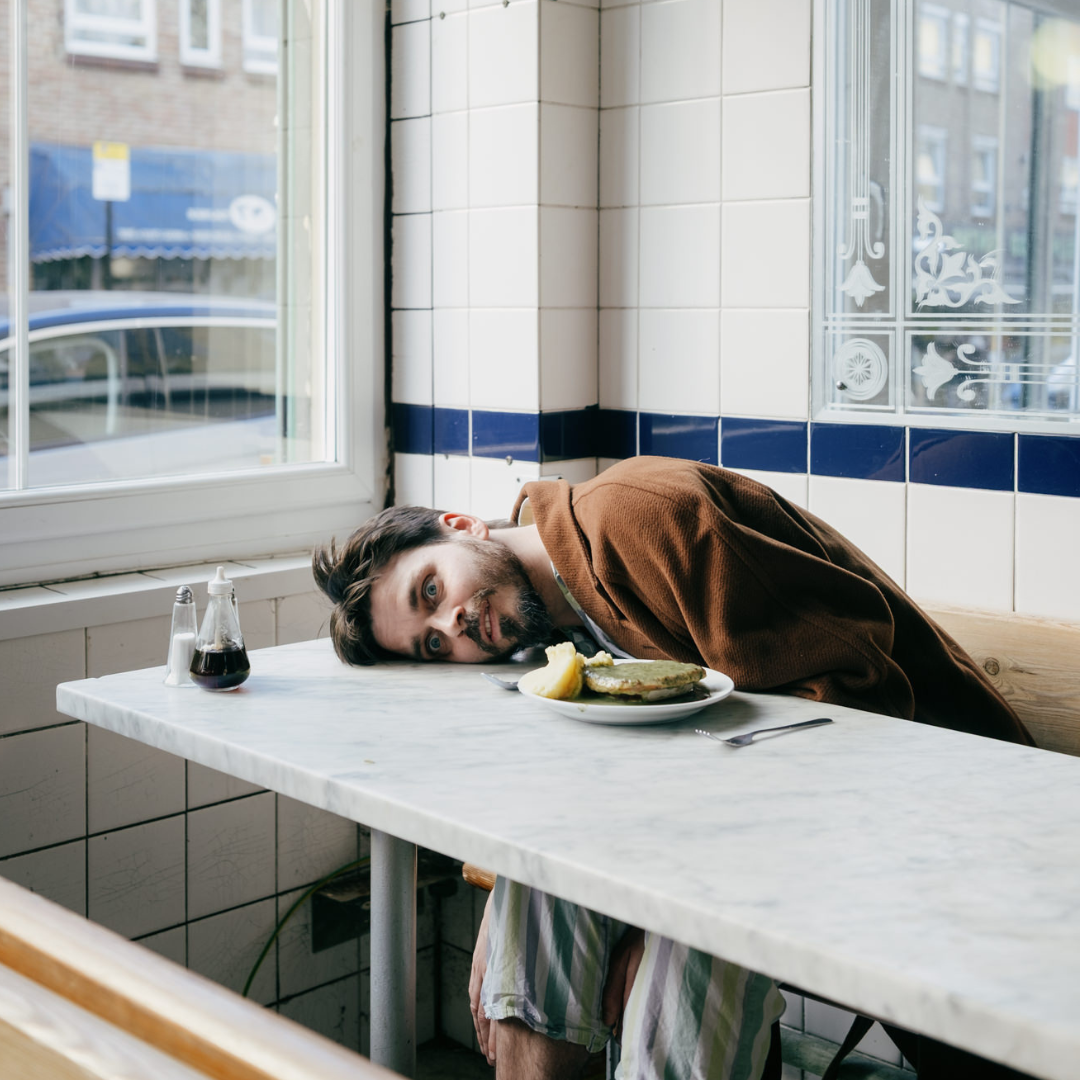
Does the comedy reflect the reality of the story the way it should?
Joz: “I mean, for me, my favourite comedies are the ones that while laughing at it and while being in hysterics at something, it also managed to make you actually think about something in a new way. And I think comedy can make you do that in ways better than drama can.
“I really love making stuff that sits in that middle ground where you’re watching something very stupid and for some reason you’re being made to think about this bigger picture as well. I really like exploring those crossovers. When an audience is laughing, then I think in a way they are more receptive to the idea that when it turns out to be about something meaningful, it sneaks up on us more”.
What can you share about the process of writing and creating the show?
Joz: “It is a solo fringe show and the myth of those things is always that they’re very driven by one person. When you go to the Fringe, it’s all posters with one person’s face and one person’s name on it. So the show is like, Joz Norris. I did write and perform it, but this gets in the way of the fact that it’s still a product of such a collaborative process, because I had a director, and I had a consultant on it, who did a lot of story input and design input. So, I did write the material, but even then, that becomes part of a conversation with the team where we talk about other people chucking ideas for jokes or they’ll go, this bit should be streamlined or it would be funny if this bit went more in this direction.
“It’s technically written by me, but I always think the fringe in particular is quite bad at reminding people that there’s a whole team of people around things”.
Do you think taking it to the fringe has altered the show in any way, and did you modify it for the tour and the Lowry performance?
Joz: “It’s the model that I know, I started doing the Fringe years ago, I’m most comfortable with making shows that fit that format and I’m most comfortable knowing how to position something with that audience. But I think the more you do it, the better you get at learning how to make something that could speak outside of that as well, because the Fringe is amazing, but it’s a bit of a weird bubble. It has so much importance for the comedy industry. So with this show, I think the fact that we’re now touring theatres with it and it had a nice enough run in Edinburgh to kind of to create that momentum to take it on tour. In Edinburgh, everyone’s already primed for something very chaotic and absurdist and stupid. The way in which it unfolds sort of plays out differently with different audiences. You can give a show a whole other life after the Fringe, because normally I do the Fringe and then I chuck the show in the bin and then that’s it. So taking it out to other cities around the place has been really cool, really fun.
“It wasn’t its first ever performance at the Fringe, but it was its first kind of launch.
It is my 1st time performing at the Lowry. I directed a show that launched there a couple of years ago. Eddie Hearst, who is an amazing comedian based in Manchester did a show, which was developed with the Lowry and premiered there at the end of 2024. I’ve worked with the Lowry before and was up there quite a lot helping develop that. But I’ve never actually performed there. So I’m really looking forward to it”.
What inspired you to write this?
Joz: “All of my shows end up being character comedy shows where I play a character with my name who is quite similar to me and in some ways it could be a stand-up show. The stuff that’s happening in the show is so stupid that it’s obviously fictional. So the things that happen to my character in this show are very much imaginative, absurdist, stupid things. But it was based on the feeling of once I’ve managed to complete this thing, then my life will carry on.
“I made a show in a literalising way, to try and tell myself to stop having that feeling. It is sort of a way of reminding myself how pointless it is to get stuck in thinking that way. Any stand-up is basically comics playing a version of themselves, so the character also has my name.
“It’s a one-man show, although there’s sort of offstage voices and things that we don’t see. It’s more of a narrative than a stand-up show.
“My background is mostly stand-up. I started doing it in University and then it just became what I did. I was like: I’m going to London and work it all out. I hopped from temp job to temp job for a while, until I had enough of a stable career in comedy that was what I did”.
How do you find doing this show with no ensemble? How is that different?
Joz: “It takes a while getting used to it because particularly the stuff I grew up with loving the most was TV comedies, which obviously are lots of characters interacting with each other. So the way my brain automatically goes towards finding things funny is that I very often make characters have phone calls in shows or talk to somebody off stage or trying to put them into dialogue with things. I think I’ve also got better in the last few years with having a team around a show, so it feels a bit less isolated. I’ve got an amazing tech and a tour manager who goes around with me and it’s so good on the timings of everything. So it’s nice when there’s a family of people around a show in a way, and it slightly insulates against the fact of it’s just you on stage for an hour. Part of the team was John Britton who was the director. Miranda Holms was the creative consultant and script consultant. James Hingley was the technician. Grace Gibson did movement direction on it, because there’s a little bit of dancing in it, she taught me just how to dance well enough to get away with it”.
What goal do you want to reach with the show?
Joz: “I think with this particular show, it already surpassed so many goals for it because it had such a lovely run in Edinburgh and this thing of being able to take it on the road and meet more audiences. I think that’s always the hope with a show is you just keep finding new ways to reach more people with it, which this one is in the process of doing.
“We would like to film it because once you’ve taken it to all the venues that want it, then comes the thing of how do you preserve it so that it’s not just something everyone remembers? So I think we might try and film one of the performances. There is also a bit of me that wants to try and explore the idea of it as a feature film as well. But obviously making a film is another mountain to climb. So I think it’s nice that there’s a blueprint for something.
“I think this is my best show yet. I always hope that every show I do feels like it’s an evolution from the last one. I think by the time you finish a show, you can always see what you couldn’t see while you were inside it, which then means the next one, you’re sort of deliberately going in the right direction. We’re doing about 12 dates in 12 places around the UK. Which is great and I feel very happy with that and it’s my 1st tour around the UK. This is show number 7 that I have done overall, but 3 of them are probably in the comedy theatre space”.
Do you think the comedy aspect of the show transmits the message that you want to the audience to gain in the correct way?
Joz: “I’m never precious about exactly how I want audiences to leave and it tends to be either because of the way in which the show is structured and because of what happens towards the end. People either leave at the end just very hysterical and giggly, because the ending is very stupid and dumb. Or it becomes so stupid by the end that there’s almost a glimmer of pathos in it or actually meaning something. So sometimes people leave, weirdly moved by it and they come up to me and say: thank you so much. I really don’t have a preference on those 2 things. I think both are really valid responses. When I see people just leaving very giggly and trying to calm down after losing it for a bit, then I find that really lovely. And when I see audience members who took something away from it I am a bit touched”.
Joz Norris: You Wait. Time Passes is at Lowry, Salford on 24 Aril 2026.