


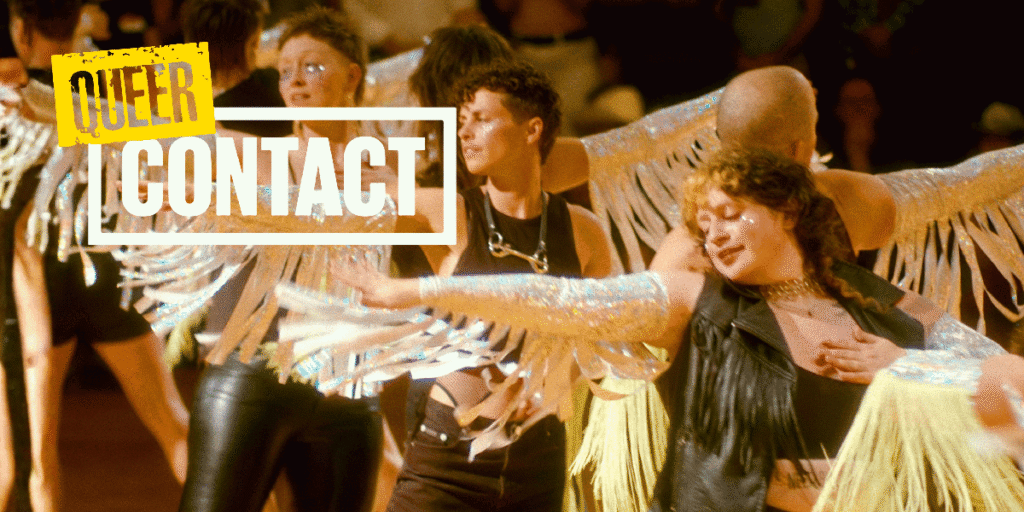
Manchester’s Queer Contact Festival returns with 10 days of performance, art and community, championing under-represented voices and embracing the breadth of LGBTQ+ talent. “The whole festival is really quite joyful,” says Contact CEO Jack Dale-Dowd, emphasising the festival’s focus on celebrating queer culture and creativity.
For Jack, Queer Contact is about far more than a programme of events. He describes it as a coming together of “different genres, different sexualities, different ethnicities and different people in general.” At its heart, he says, “It’s really celebratory and fun. It’s a safe space for queer people, and it’s a vital part of pride in Manchester.”
Running for more than 16 years, the festival has become a long-standing fixture in the city’s cultural calendar, and Jack believes it remains a vital platform for queer creatives in Manchester. The programme has been desiged to ensuer there is something for everyone, spanning theatre, cabaret, film, live art and even line dancing, alongside bustling market stalls showcasing work from local queer makers.
And Jack promises this year’s festival is the best yet. “This year we’re running over two weeks, and we’ve got a real range of shows,” he says. From solo shows to cabarets and the returning live-art shows, Jack knows that the Queer Contact festival is worth as much of a visit now as ever. “We’re trying to represent as many different people as we can within the festival and get everyone together to have a really good time”.
The festival has grown into a cornerstone of the city’s cultural calendar. For Jack, its continued presence is more important than ever. “It’s the political culture and how we as a country are feeling less welcoming and less inclusive. I think there’s been a lot of really negative, damaging things happening to the queer community,” he says. “Although it’s not an activist space, specifically this festival, it’s about having that opportunity to come together and to celebrate and to be joyful.”
Although the festival has been going for years, there’s no plans for it to slow down, as Jack and the team constantly evolve and adapt the festival. “It’s definitely ever changing. It doesn’t feel stale, it feels current,” he says.
When it was revealed last year that Manchester Pride had entered liquidation, the state of queer recognition and celebration in Manchester felt uncertain. But Queer Contact has always distinguished itself as an entirely different space to celebrate the LGBTQ community, the festival remaining firmly arts focused. “Queer Contact’s specifically an arts festival… it’s very art specific based. It’s a very inclusive space. It’s very representative of the wider community,” Jack explains. “We’re trying to get as many things within the festival as we can so that everyone could feel seen.”
Accessibility remains central to the festival’s ethos, says Jack. With tickets starting from £3, and some events free, the aim is for festival-goers to celebrate queer talent without financial barriers, during a time where the cost of living continues to bite. “We really want people to be able to feel like they can come and see work and come and enjoy it and come and celebrate with each other,” Jack says. “We also offer Pinch tickets, these are our lowest priced tickets available and people can get them with no questions asked. It’s really about recognising who we’re here for.”
As a queer man himself, Jack recognises the importance of working on Queer Contact, and what it means for him personally to be able to showcase this exceptional talent over these two weeks. “This was the first arts festival I ever went to when I moved to Manchester,” he recalls. “It was the first time I ever saw such a wide range of what different queer art can be.”
There is an amazing display of talent within the queer Manchester community, and it’s important institutions, like Contact, have spaces for these talents to be recognised and upheld. “It’s important that everyone can feel seen,’ says Jack, “There’s work on display that speaks about my life.”
Jack recognises the cultural context of queer people in Manchester, and shares how he hopes Contact can offer more opportunities and events for the community that steers away from nightlife and partying. “Partly what drew me to Manchester was the queer community. Queer culture is often focused around the gay village, drinking and partying, and that kind of hedonistic lifestyle. Manchester definitely offers that. But I also think the city offers so much more than that for queer people,” he says.
There is a sense of belonging and familiarity for queer people in Manchester, something the festival hopes to also achieve. “We provide that space where anyone can come and feel like they’re safe”. Over two weeks, the showcase includes a solo show, an ‘anti Valentine’s cabaret night, an art market supplied by queer art makers, and queer-run western and country dancing. It’s jam-packed with something for absolutely everyone, so every single person attending can feel heard. “If we don’t put on artists that are representative of the entire community, then that community doesn’t feel seen.”