


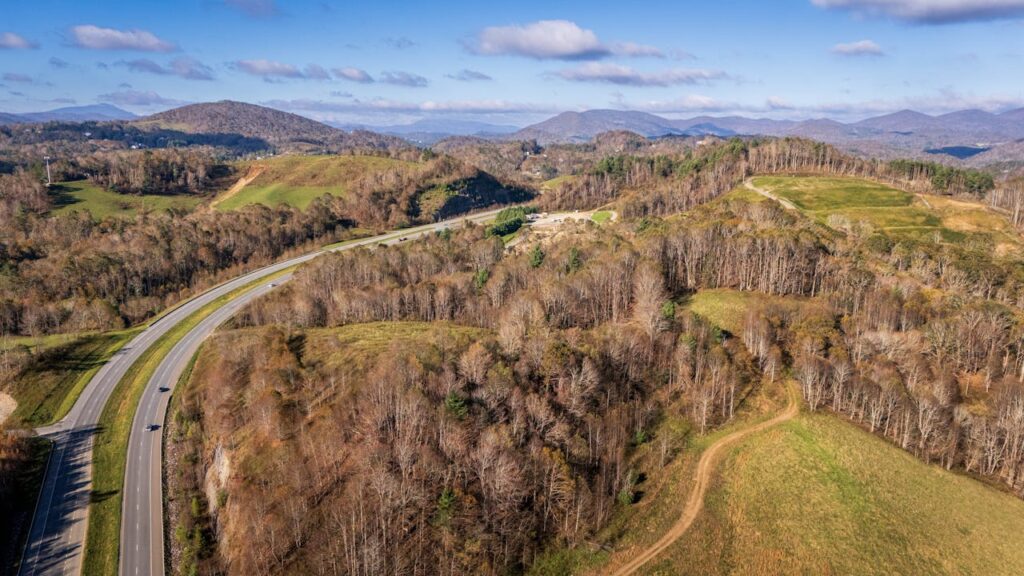
An Appalachia road trip sounds glorious while it’s still theoretical. In your head, it’s all blue‑green ridgelines, improvised pull‑offs with views worth the sudden braking, small towns folded into the landscape, and the kind of gas‑station snack stop that somehow becomes the emotional core of the journey (maybe thanks to Buc‑ee’s).
Much of that is real. And much is genuinely the scenery that forms lifelong memories.
But Appalachia also has a habit of shrugging off idealised travel narratives. This is not a region designed for frictionless movement or gap‑year postcards. It’s beautiful, but also demanding, idiosyncratic and occasionally a little wild around the edges. Knowing that upfront makes all the difference.
1. Those backroads escalate quickly
If your route includes backroads, which it probably should, don’t get complacent too early. These roads can be staggeringly beautiful, unfurling through forested hills and deep valleys, but they’re also often narrow, steep, sharply curved, and sometimes missing guardrails in places where you’d very much like there to be guardrails.
Signage can be minimal. Tight bends appear with little warning. Stop signs operate more as a suggestion than a guarantee. This doesn’t mean the drive is constant white‑knuckle terror, but it does mean attention is required. You can’t drift. Slowing down is fine. Pulling over is fine when there’s somewhere to do it.
2. Locals drive like the road belongs to them (because it does)
Visitors often notice this quickly: cars and trucks moving at brisk, confident speeds on roads that feel intimidatingly small. It’s not aggression; it’s familiarity. These roads are daily life, learned by repetition rather than signage.
You don’t need to absorb that energy but you do need to expect it. Faster drivers will appear behind you. Large vehicles will come around blind bends. Leave space. Stay alert. Accident rates are higher on rural Appalachian roads, and awareness is your best defence.
3. Peak season is glorious — and crowded
There’s a reason summer and autumn are the big seasons for Appalachia travel. Summer brings long, green days, lakes and forgiving weather. Autumn delivers those famed explosions of colour, each ridge seemingly competing with the next.
The downside is that everyone else has seen the same photographs. Campgrounds book out quickly, especially if you’re hoping to secure a full hookup RV site, and availability can vanish faster than expected. Hotels, cabins and popular attractions follow close behind. In short, during peak season, Appalachia favours planners over last‑minute romantics.
4. The road signs mean exactly what they say
Deer crossing. Tractor crossing. Horse‑and‑buggy crossing. These aren’t decorative touches or quaint regional colour. They exist because those encounters happen frequently. If a sign warns you, believe it.
Which brings us back to the Appalachian driving rule that underpins everything else: distraction is not an option, particularly once you leave the highway behind.
Planning tips before you go:
A trip to Appalachia doesn’t need to be micro‑managed, but it does reward realistic preparation.
Plan driving shorter daily distances than you normally would. Mountain miles take time, and that’s before you factor in scenic stops, slow descents or the occasional pause to let your nerves settle.
Download offline maps and double‑check routes in advance. Mobile service can disappear abruptly and stay gone longer than expected. A paper map still earns its place here.
Reserve accommodation earlier than feels intuitive, especially in summer and autumn. RV parks, campgrounds and small independent motels fill quickly, and flexibility narrows as the season peaks.
Pack with the landscape in mind: water, basic supplies, reliable brakes and a tolerance for sudden weather shifts. The mountains set their own terms.
Most importantly, recalibrate your sense of progress. Appalachia isn’t about ticking off distances or destinations. It’s about paying attention to the road, the terrain, and the fact that this is a place that doesn’t smooth itself out for visitors. And remember. that roughness isn’t a flaw. It’s the point.