
 Anastasia Tirca
Joss Arnott Dance celebrates its 15th anniversary with an ambitious new show, ‘Meet the Hatter’, which has been two years in the making.
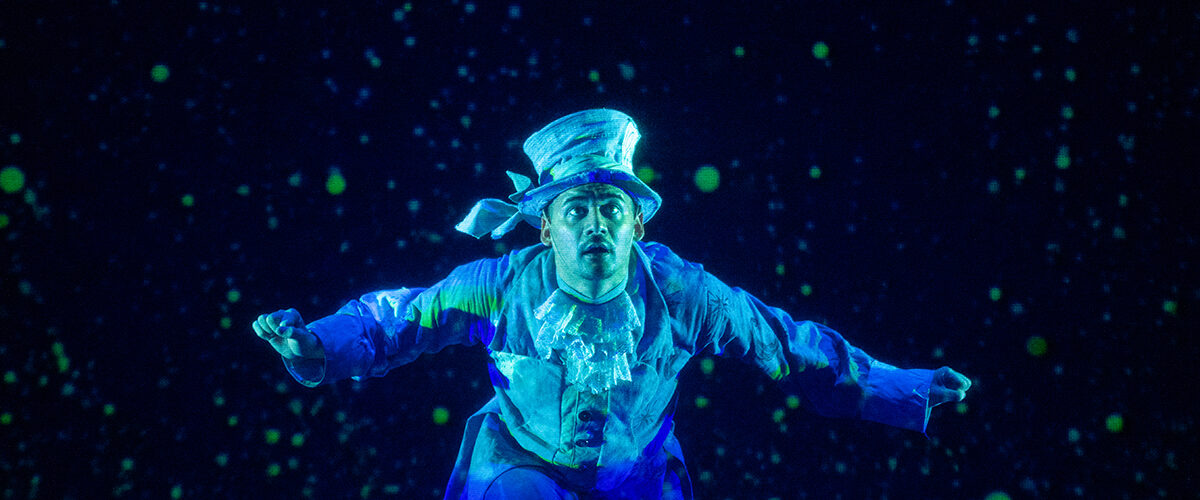
Inspired by Lewis Carroll’s iconic character from Alice’s Adventures in Wonderland, the company takes the audience on a magical journey of imagination and self-discovery, with Dominic Coffey and Robbie Ordoña sharing the role of the Mad Hatter.
Choreographed and created by Artistic Director, Joss Arnott, in collaboration with the dancers, this multimedia production pushes the boundaries of solo dance by combining it with storytelling, original music and animation in an immersive family theatre show for ages 5+.
Although it has been a long journey in the making, there is more ambition to come for ‘Meet the Hatter’. The show forms part of a trilogy of shows for Arnott, that is yet to be completed. And there are plans for an international tour.
Anastasia Tirca meets him to find out more.

What does it mean to you for ‘Meet the Hatter’ to be an anniversary production?
Joss: “It’s been a long time coming really. I’ve always wanted to venture into multimedia for the last few years and I felt that naturally the work that we produce has always been described as really cinematic and very visual anyway. It’s always been in the back of my mind that I just wanted to delve into the digital world with this anniversary production and ‘Meet the Hatter’ was the perfect choice.
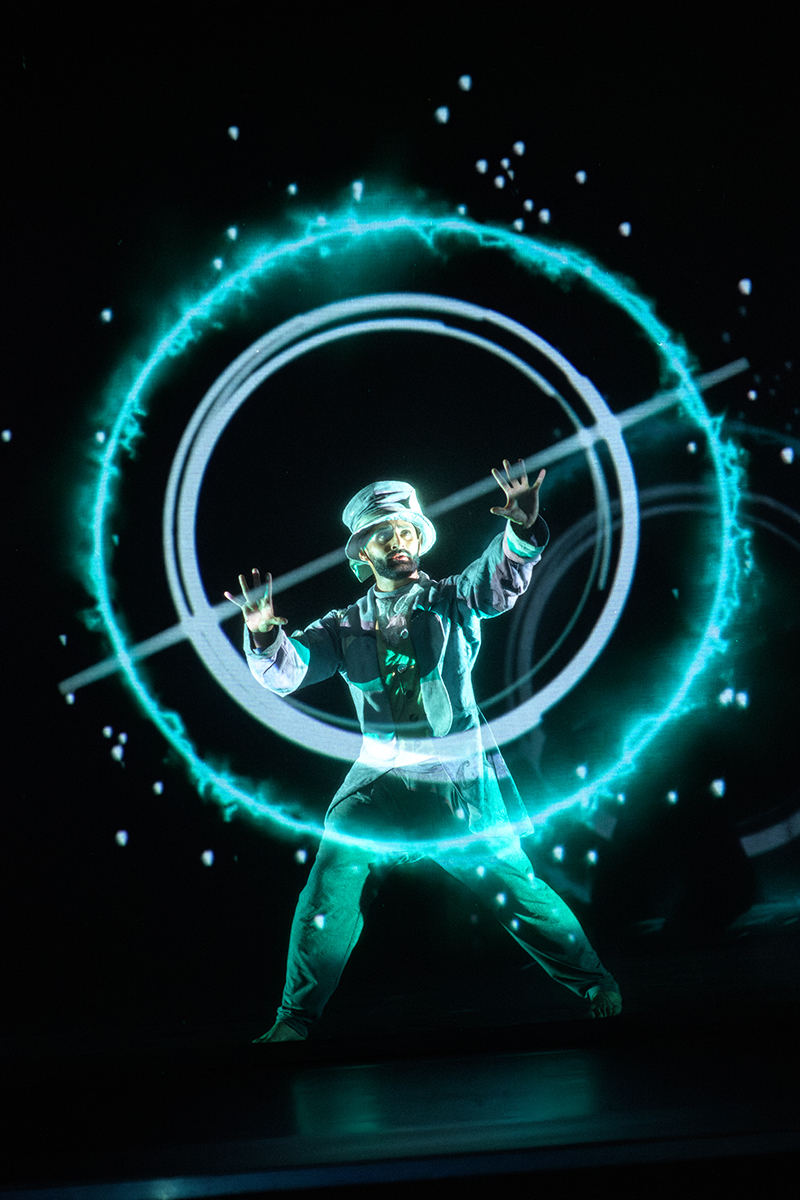
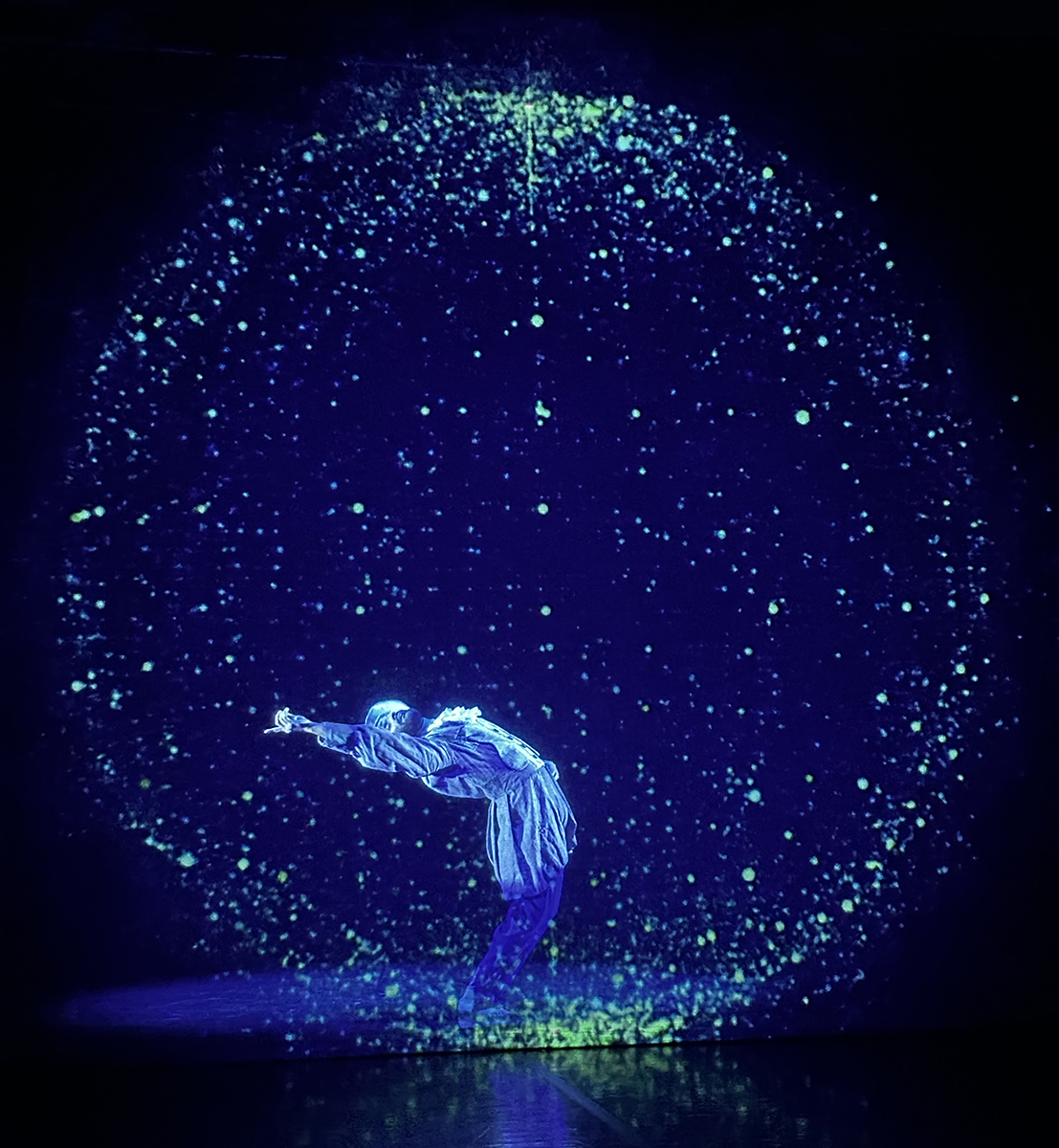
“For the show itself, we’ve gone really small scale with the set, but try to create a large scale spectacle. So the only set that we have is a gauze that’s from ceiling to floor, wing to wing, and everything is projected onto this gauze and interacted with the performer. It’s very immersive in that sense and it’s been really interesting to see what the possibilities are with a digital performance.
“We have two performers who share the roles, but it remains a solo show. They are Dominic Coffey and Robbie Ordona and we’ve been in rehearsals with both”.
Why did you pick the Mad Hatter when you started creating this show?
Joss: “The whole concept of multimedia was the real starting point for us. And when we were thinking about if we’re going to tell a narrative story, we thought what characters could create this kind of spectacle. As well as, what if it’s going to be a solo show? What kind of character could really hold a space for an hour? The Mad Hatter has always been really fascinating to me and what you can do with the Hatter. There have been loads of interpretations over the years, but we spent a lot of time thinking about what makes this character unique and how can we make him relevant. We did a lot of development work when we were making the show with kids in schools and making sure that what we were creating was really relevant for our target audience.
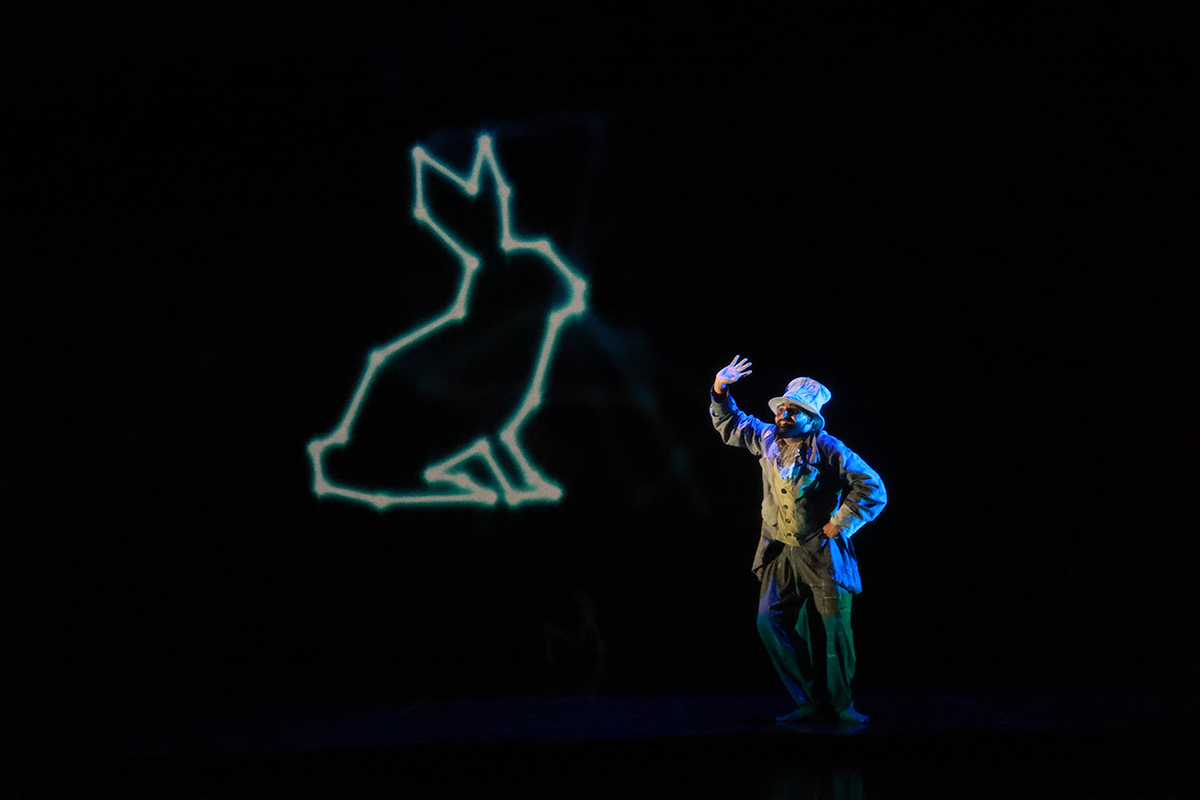
“In the show, there’s subtle nods to different characters. We have a rabbit animation, we worked with an animator for that. There are reminders to characters in the original books. When we were developing the show, we were doing a lot of our research, in schools, community groups and not everyone actually knew the story of Alice in Wonderland. But it was great because we could reinvent a new story, we could reinvent the character.
“Dom and Robbie are amazing and they’ve done a lot of theatre and acting as well as dance. So their performance quality is everything they can offer rather than just their dancing skills”.
What inspired you when creating and structuring this piece?
Joss: “The whole multimedia side of things has been able to elevate our work and this piece is heavily driven by narrative. We incorporated 12 different scenes in the piece. Each scene has its own landscape, environment, visual concepts. We dive into what is really exciting and different about each of the scenes and how we can be transported to different places. So it was quite limitless, which was amazing, but challenging at the same time because it was so open. We really had to narrow down the parameters of actually what we want to do and what we want the audience to feel.
“It is quite a long time for one person to be on stage by themselves, but it’s quite interesting that both of the dancers say that they don’t feel by themselves because the show is so immersive for them and it’s interactive with the digital screen, the music and the lighting.
“I mean, we spent about 2.5 years in development and then in creation. We spent the majority of last summer making the show and finally, we premiered in September. Now we’re just coming to the end of our first tour and we hope to go on tour for the next couple of years”.
How has the show evolved since its premiere?
Joss: “It’s the first time that I’ve made a solo show, which at the beginning, I felt quite nervous about, the challenges and how that’s going to be different than working with a big ensemble. It’s just been really amazing to have to see how the audience reacts to it and also the developing of the stylistic movement qualities of the work that are very branded to our classical contemporary work. We’ve had such a good time on tour and by seeing what works, everything is always in development.
“We have been funded by the Arts Council, England and project grants as well which have made us feel supported throughout the production.
“This is our 2nd work in a trilogy of works that are targeted for children and young people. We created Tinman in 2022 and then toured that for two years whilst the Hatter was in development. Now we’re developing a new, indoor version of Tinman, a 20-minute version”.
What do you want to achieve and express with this performance?
Joss: “Our target audience has been 5 to 11 with this show, but it’s been really great to see the amount of adults that are coming up to us and being able to find relevance within the show as well. I think it’s just really giving people a positive experience.
“There’s a lot of emotional, pathways and journeys within the show and people are able to say that they’re feeling that and that they’re able to project their own experiences onto it. Considering there is a gauze on stage, where sometimes the performer is either behind it or in front, it is good to know that there is not that disconnection when the performer is behind the gauze.
“No matter where people have come from or like what their experiences have been, they can still enjoy it. It’s 65 minutes straight through as well, so no intervals. We wanted to keep it full length, as opposed to stopping in between and then having to pick it back up again”.
What did you enjoy most about the process of this show?
Joss: “I think that the team has been amazing. Whether they’ve been lighting designers, multimedia, artist, drama, dancers, there’s just been a lot of people involved in the creation of this show. It does have quite a universal meaning of being able to find your community and find your belonging and purpose in the world and overcoming loneliness, so to see actual feedback come back from audiences saying they completely got that, that was great for me. It has been really lovely to know that we’re actually sharing something that has meaning”.
If you could say anything to your audiences, what would you say?
Joss: “I feel people should come and see the show because it is real escapism. It’s a very cinematic spectacle. Regardless of which space it’s in, whether that’s small scale, mid-scale, large scale venues, it is still very relatable. I think it creates a lot of dialogue between the audience and the performer and it’s just a really lovely experience for people to be able to witness that, and share that with their families”.
What is the main message of the show?
Joss: “The concept is exploring the Hatter’s sense of belonging and acceptance in society and his longing for connection and community and companionship. Realising that he’s not alone and that people can be there the whole time.
“The idea, that he is very much an outsider and the importance of being different and using that as a superpower rather than seeing it as a negative. So I think that’s quite important for young kids in the chaos that is the world at the moment to be able to see themselves having superpowers – that their own individuality is something that makes them special”.
Meet the Hatter is at Z Arts, Manchester on 14 and 15 February and Heywood Civic Theatre on 20 and 21 February, 2026.


 Carmel Thomason
 Leslie James Kerwin
 Catherine Jones