
 Leslie James Kerwin
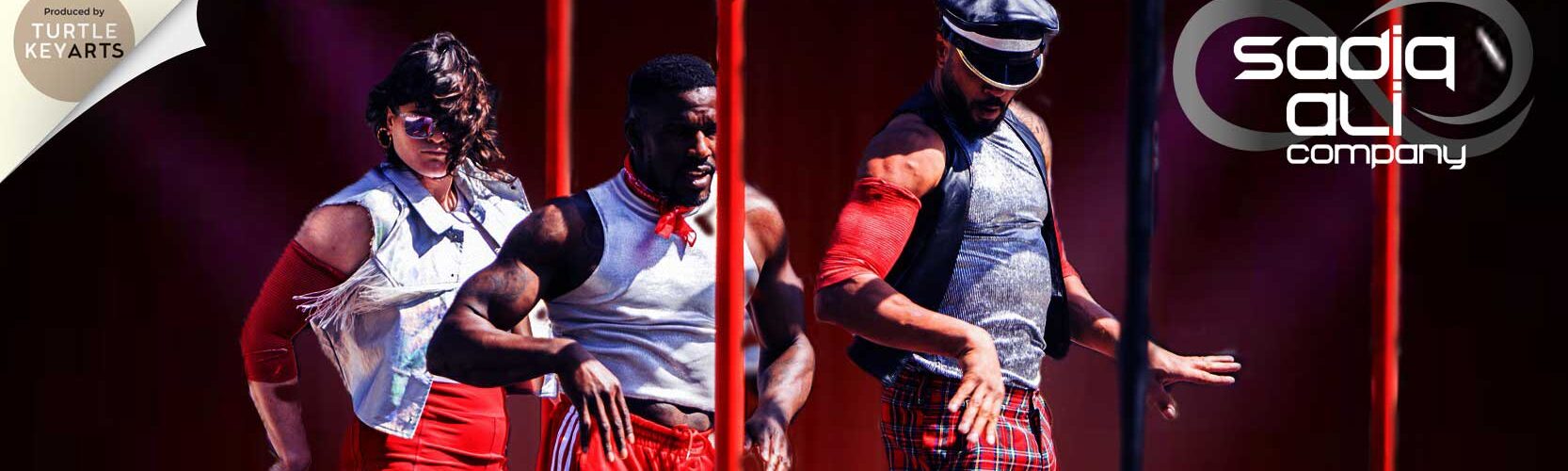
When Sadiq Ali was diagnosed HIV+ during his circus training at NCCA, he witnessed the fear and ignorance that still surrounds the virus. He talks to Leslie Kerwin about his new work, ‘Tell Me’, created in consultation with HIV charities Positively UK and CHIVA (Children’s HIV Association) as an open letter response to his experiences told through Chinese Pole, aerial artistry and physical theatre.
Now wrapping up the final week of rehearsals, award-winning performer and activist, Sadiq Ali is feeling the excitement – and not just because the six-inch pleaser heels finally came in. His latest show, Tell Me, is set to premiere at Lowry in January – a surreal, time-bending blend of circus and theatre, he is as excited about the “gorgeous” crew working alongside him as he is about swinging above the crowds in aerial cubes. Hearing of an upcoming Quays Life review, he feigns a shout of terror – then, with a grin, picks up an invisible pen: “It’s a five-star sellout show!”
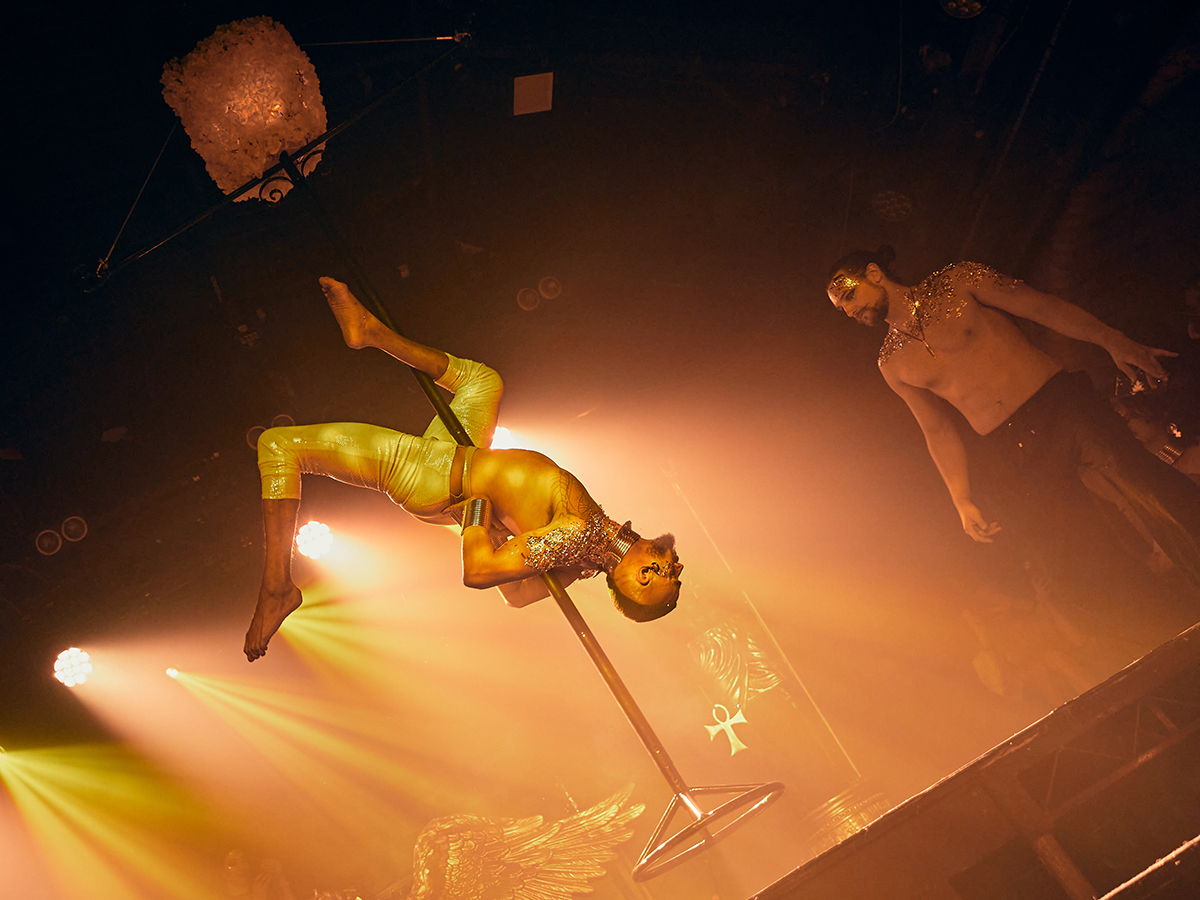
Sadiq Ali – an openly queer, mixed-heritage circus performer and activist – is a showman through and through. His graduation from the National Centre for Circus Arts saw his debut show – The Chosen Haram – premiere to critical acclaim across the UK and abroad. From there, he kept a steady presence on the international Cabaret and Burlesque circuits, represented the UK for Mr Gay World, and became a leading campaigner alongside the Terrence Higgins Trust and others.
Before all of it, he says, his family had feared he was about to die.
“I told my family that I’d been diagnosed with HIV,” he says, “and this was in 2014. The response from my sister… she broke down. She started crying. She thought I’d be dead within months.”
Sadiq can in many ways speak better than most about HIV in performance – he’s lived it. News of his diagnosis spread in his first year of university, and his classmates began to distance themselves, something he chalks down to a fear of catching HIV. “They’ve learned with me, and I’m not slating them,” he says. “But it was f****ing embarrassing.
“I had to disinfect every single mat that I stretched on or touched in case of the virus – I was being treated like a leper because of outdated knowledge. But the university worked with me to update it, like, ‘what should this [policy] actually be?’. And they were like, ‘nothing, obviously’.”
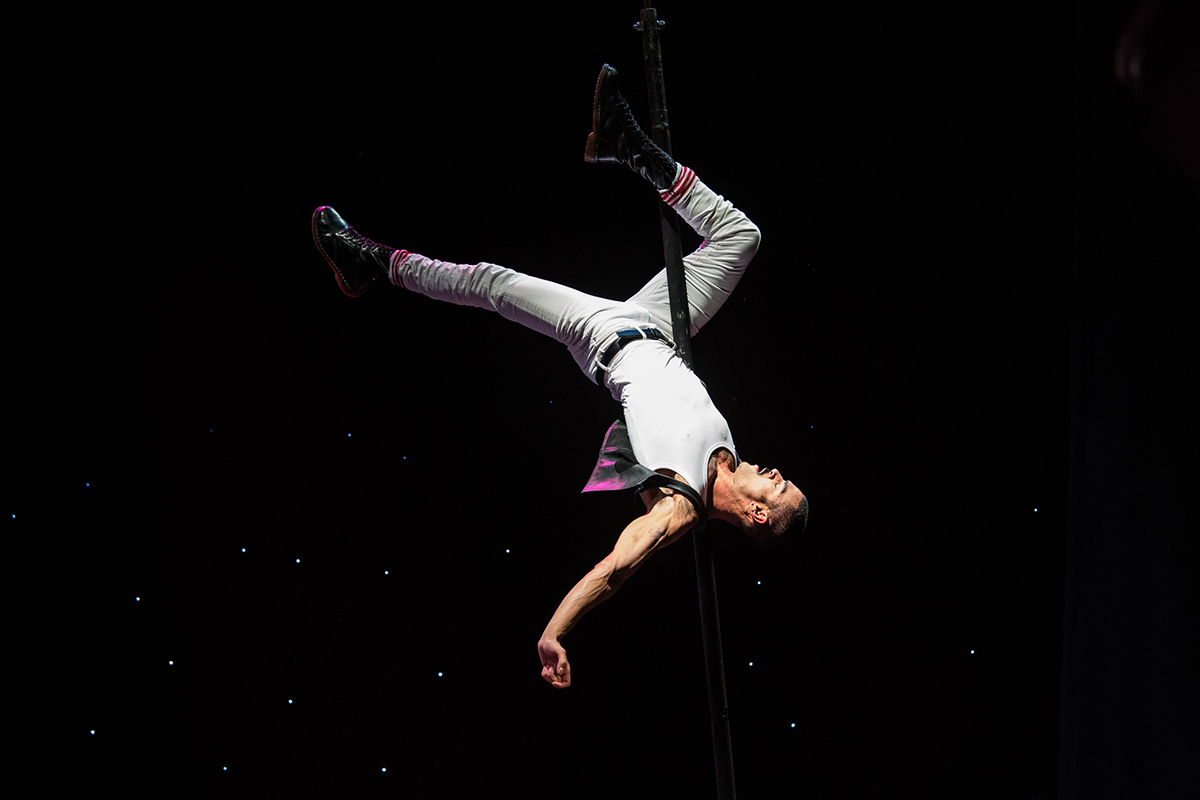
His final performance, ‘The Chosen Haram’, came as something of a catharsis, and would later win him the Unforgettable Performance Award at the Edinburgh Fringe Festival. A queer, Muslim love story that belies a foray into chemsex parties and self-destruction, the show was almost censored entirely. “The school wouldn’t publicly show it because of the fear around broaching the subject, and there were a lot of politics at play there.
“[Part of it] was because it was about Islam, and even though it was a piece of personal experience about trying to come out within a faith structure, there was that white fear about doing it wrong – which I do understand. I didn’t realise at the time that doing something like that, about my own life experience, was potentially censorable.”
The show went ahead, and Sadiq found himself leaving with more than just the best grade he’d ever had. In the final performance, an old injury had split open, spraying the studio with blood as he spun by his neck five metres in the air. In a far cry from the days of classmates “freaking out” over sharing a beer, “it was those same kids who came together and started clearing up my blood.
“They put me in a shower and patched me up without any hesitation at all, and I realised that I’d accidentally made a ton of allies by just being open and asking people to learn alongside me rather than in silence. And I think that’s one of the reasons for making [Tell Me]: to try and distil that creating of allies through shared humanity and knowledge, and distil that into an hour show that removes fear from people.”
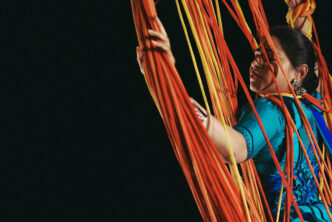
Set to premiere in the new year, ‘Tell Me’ promises to be a fusion of dance, circus, and drama, swirling time between a woman’s past and present selves to reflect on, as Sadiq says, “The thoughts and reflections of them [both] that help her come to terms and look at what the future might look like.
“I think a woman’s story within the HIV narrative is often quite invisible, and their struggles are different, in terms of sexual shame or stigma. But that’s why I’ve been working with people from Positive UK, which was founded as a charity for women living with HIV.
“I love all the work that’s out there, like ‘It’s a Sin’ and ‘Pose’, but I feel like a lot of it leaves us in the horror of it all – I want to give a little bit of celebration and love and hope, and see a woman be able to have everything.”
It will feature Sadiq and fellow performers Junior Cunningham and Phoebe Knight performing on the ground and above in three aerial cubes, not just as a love letter to those lost in HIV’s past and present, but in part to the mother of one of Tell Me’s choreography consultants, Jonathan Lunn.
Talking about it, Sadiq’s gaze travels upwards in thought and stays there, and there’s a sudden heaviness to his voice that wasn’t quite there before. “He wouldn’t mind me saying his brother passed away from HIV and Aids-related complications,” he says slowly. “And he found a number of letters from his brother to their mum, at the time. And we read them in the room, and they’ve become part of the soundscape of the show. It’s a tiny little experience of the emotion of a then and a now.
“There’s members of the team who’ve got things going on in their lives that are not HIV, but which are so close to some of the connecting things we’re discussing and exploring that I’ve found the drive and power in what [Tell Me] can do for other people, in bringing us together,” he continues.
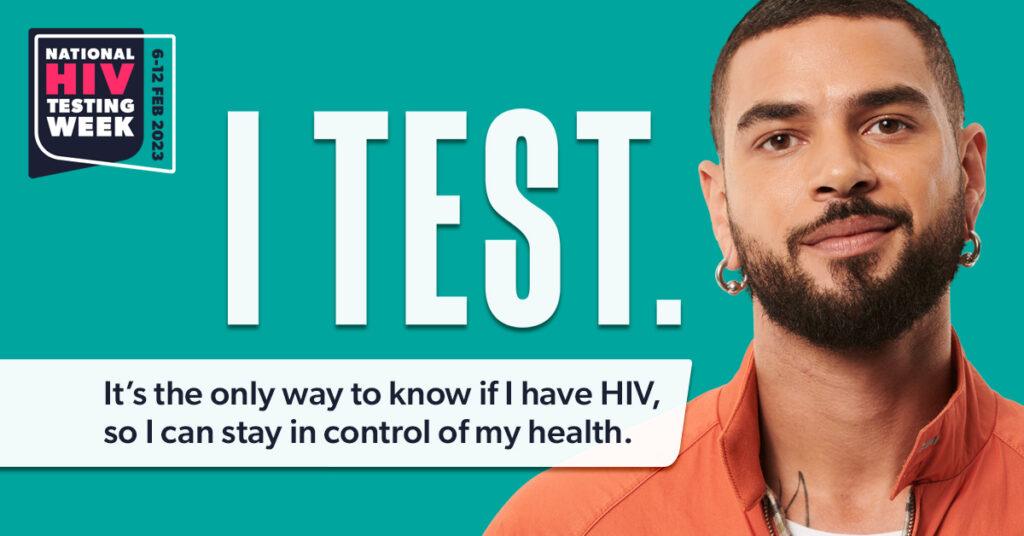
“With my HIV and work in the past, I have no shame around it. I’ve had pictures on the backs of buses and Tube maps and the campaigns were everywhere around London for a while, and I thought nothing of it. And the reason I can think nothing of it is because of where we are now.
“I start to look at the future where we have a potential for a cure, or for a vaccination that is yearly or six-monthly instead of every day, and then I hear about the turn of our politics and I’m looking at a future that could potentially look more like our past. It feels like a pivotal moment where we could choose to forget our past and end up returning to something that we should never return to. That we can’t return to.
“’The Chosen Haram’ was me going, ‘I’m queer and this is my life’. And this one’s been more of a slow burner about the world feeling really separated at the moment, and the catharsis of seeing me connect with someone who must be in their late 60s or early 70s and hold each other and cry while we read a letter.
“There’s a power in the kind of work we’re doing,” he says. “I just want people to walk away having just that little, tiny bit of their life changed in a way that they might take a beat longer for a stranger in the street.”

 Holly Critchley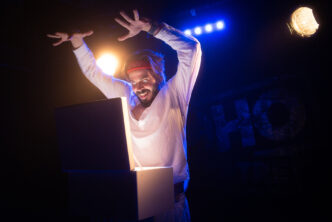
 Anastasia Tirca
 Carmel Thomason