 Jordon Francis
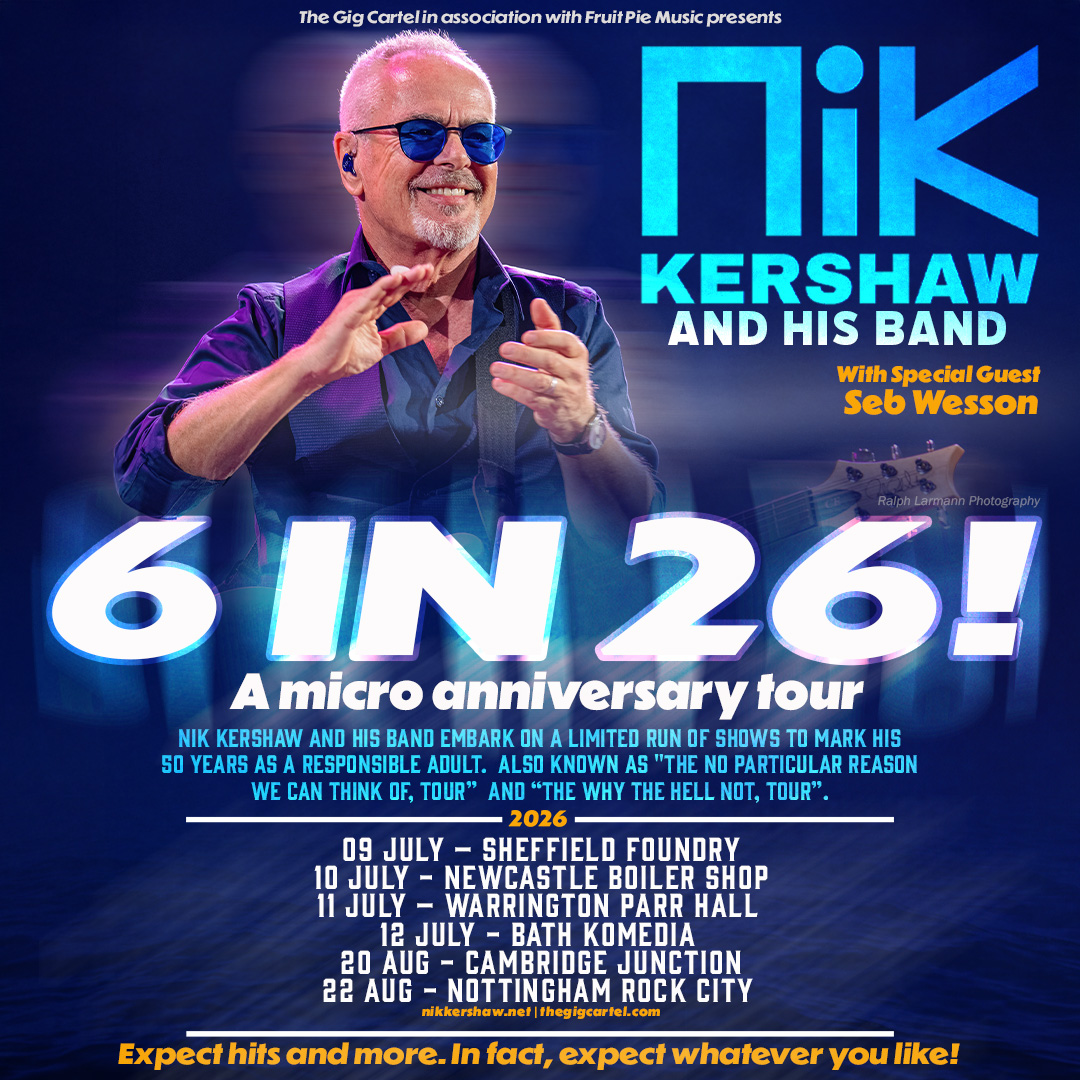
“What am I going to do? Am I going to sit at home watching Homes Under the Hammer for the rest of my life?” Laughs Nik Kershaw, as I ask him about the motivation behind his ‘Six in 26’ tour due to stop at Parr Hall in Warrington.
“You want to get out there and have a laugh with your bandmates. It’s good fun, a hoot, it’s like being in the Boy Scouts again. It’s a massive school trip with nobody in charge.”
Nik Kershaw is no stranger to taking to the stage, his four decades long career and slate of global hit singles including, ‘Wouldn’t it Be Good’, ‘The Riddle’ and biggest hit, ‘I Won’t Let the Sun Go Down on Me’. Has seen him perform around the globe, including an iconic performance at the 1985 Live Aid benefit concert at Wembley Stadium that attracted a global television audience of over 1 billion people.
Truly there have been few artists that have captured the imagination and burrowed in to the hearts of music lovers at the pace Nik did after signing his first record deal in 1983, “We were recording the first album in the summer of ’83 and by mid February of ’84 I couldn’t leave my house without a bodyguard.” He was living the dream, from being in a local professional band for three years, playing at weddings and bar mitzvahs, until the work eventually dried up, to going solo and spending 62 weeks on the UK Singles Chart through 1984 and 1985. Beating every other solo artist in the same period in the process.
Yet he explains how the transition from being a starving artist to a global star in such a small window of time was a jarring one: “Most of the time you’re standing there going this is amazing and the rest of the time you go this is terrifying because you can’t get off. You’re on this ride and it’s going to take you with it.”
Fame often has its caveats, it is probably a tale as old as the music industry itself, Nik was no stranger to them, “I do remember occasionally it all getting to me, and me just sitting in the corner of a hotel room, rocking back and forwards, but that was pretty rare.” Just as quickly as he rose to fame it seemed like his spotlight was dimming, “I kind of got out of the business in ’89 for a bit because the fourth album didn’t go very well and it was kind of like, that was it, that was the only chance I was going to get.” Speaking candidly Nik explains how frustration affected him at the time, “When you spend a huge amount of time, energy, and love making something new, and then it’s overshadowed and obscured by what you’ve done before, you almost think, well, if this was my first album, it would be getting a lot more attention than it is.”
Looking back on this period now, Nik holds no ill feelings, “There’s a very small window of opportunity to show people what you’re made of and what you do, and most people don’t even get that, so I’m very grateful that I got that window.”
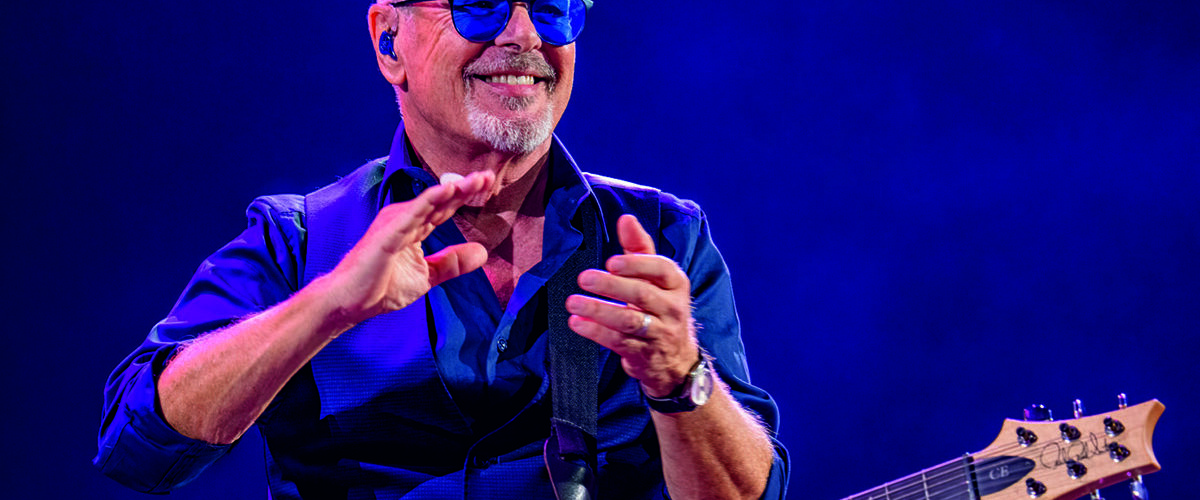
There has always been a quiet defiance from Nik, whether that be rebelling against following in his parents musical footsteps as a child, telling me, “When you’re young the last thing you want to do is what your parents did, I just wanted to be a footballer or racing driver until I was 14 or 15 when a mate of mine got himself an electric guitar.” Or dissociating with his hit songs when fans clamoured for them most, explaining that he went through a period of getting bored with playing those songs live and started changing their arrangements to make them sound different. Or returning to music with ’15 Minutes’ his fifth solo studio album a decade after retreating to the shadows to write for artists such as Cliff Richard, the late Bonnie Tyler and Gary Barlow. An album he closed with the title track, an exclamation that if it was to be the end of his time in the spotlight, his mic drop, then it was going to be on his terms. He wasn’t just going to own it, he was going to give it its own anthem, and he would sign off in a soaring crescendo.
Through this defiance, a deep understanding of himself, his artistry and his audience has developed. “Most people will associate me and my name with four or five songs and that’s fine, I’m comfortable with it. I wouldn’t want that 15 minutes again to be honest. I’m not prepared today to pay the price for that kind of fame. I’m very happy being able to walk around Tesco.”
Speaking on his hit songs he smiles “You realise that, mate, they’re not your songs, they don’t belong to you anymore, they’re the fans songs, they belong to them and how dare you change them.”
Of course now we know that this was only the beginning, his unprecedented run in the 80s, his complicated relationship with his work in the 90s and that chapter closure of an album in 1999, has been followed up with four more albums since the turn of the century. But it has been his non stop touring over the same period that really nurtured his longevity.
“I went back to the all the original versions of my hit songs, I love playing them now. They’re lovely moments during a set where there’s a connection with everybody there, where everybody in this room knows this song, it’s fantastic.”
In terms of what you can expect from his latest tour offering ‘Six in 26’, it wont just be the hits in their original glory, “It’s good to get out in front of your own audience and play some of the more obscure stuff. I’ve said to the band, what do you want to play? They’ve all got songs that they want, so there’ll be songs there that people haven’t heard for quite a while.”
“We haven’t got pyrotechnics, we haven’t got performing seals or anything, it’s just us really, having a laugh. So, if that’s what you’re in to, please come along.”
Nik Kershaw and his Band are at Warrington Parr Hall on 11 July and touring throughout July and August.


 Carmel Thomason
 Lorraine Worsley-Carter