
 Leslie James Kerwin
Born in Salford and having lived elsewhere, Emily Simpson is used to the city’s reputation as Manchester’s indignant shadow.
“Salford is always the other city,” she says. “It has a confusing, complex identity that is often squashed, forgotten, or associated with negative things, because it is quite a complex place.”
The twinned history of Manchester and Salford’s manufacturing, engineering, and the arts give way thanks to the split of the River Irwell, from which has grown two separate identities that define the two cultures – or not, according to many. Now back in Salford, Emily is once again exploring the veins of their background, and – alongside fellow artist Chris Alton – is recapturing Salford’s identity, one stitch at a time.
“I make banners for quilts, and a lot of it is about celebrating identity,” Emily says. “We wanted to work with a Salford audience to create a banner and pick out areas of that that offer identity from a past history, while looking forward and trying to figure out what it means to be from a very specific place.”
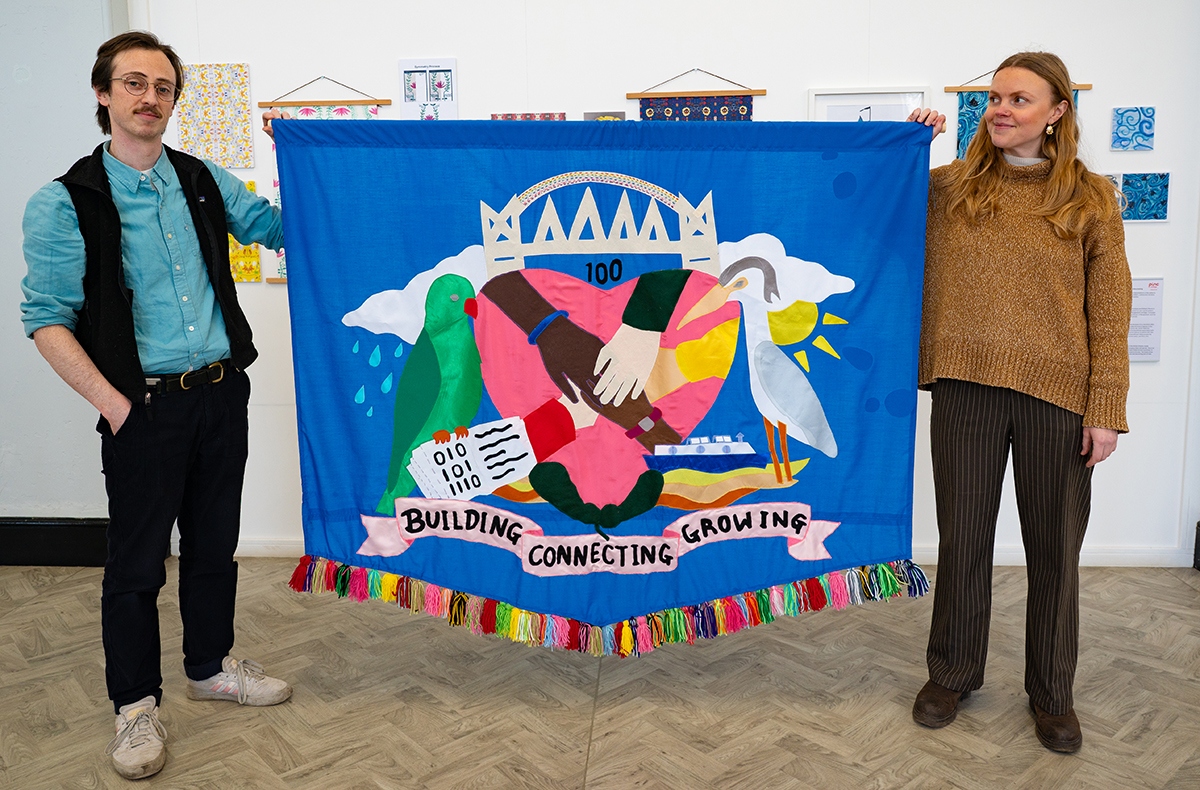
The Salford Voices banner exhibition comes from a collaboration between the artists and the residents at the Broughton Community Centre, and marks the centenary of Salford’s city status. Nine banners are now on display at the Salford Museum and Art Gallery until this summer, with each piece providing references to local history, landmarks, greenery, and community.
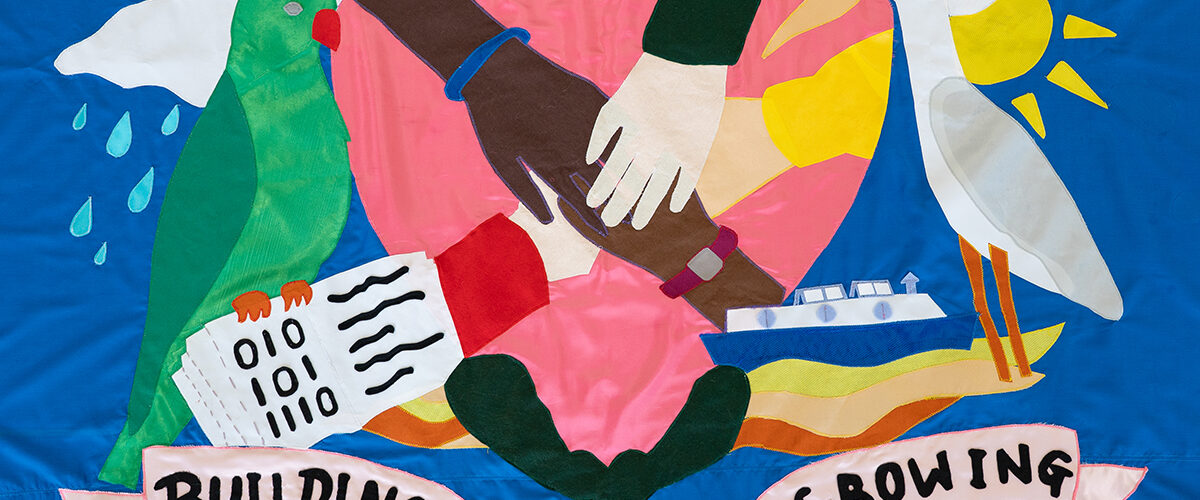
One banner in particular – larger than the others – is set to be a cultural centrepiece in the museum. “There’s a rose-ringed parakeet on the left-hand side,” Emily says, “to celebrate and represent the recent migrants in Salford who have made it their home. And just like the rose-ringed parakeet, there’s a book that represents Salford being the first city to have a library.”
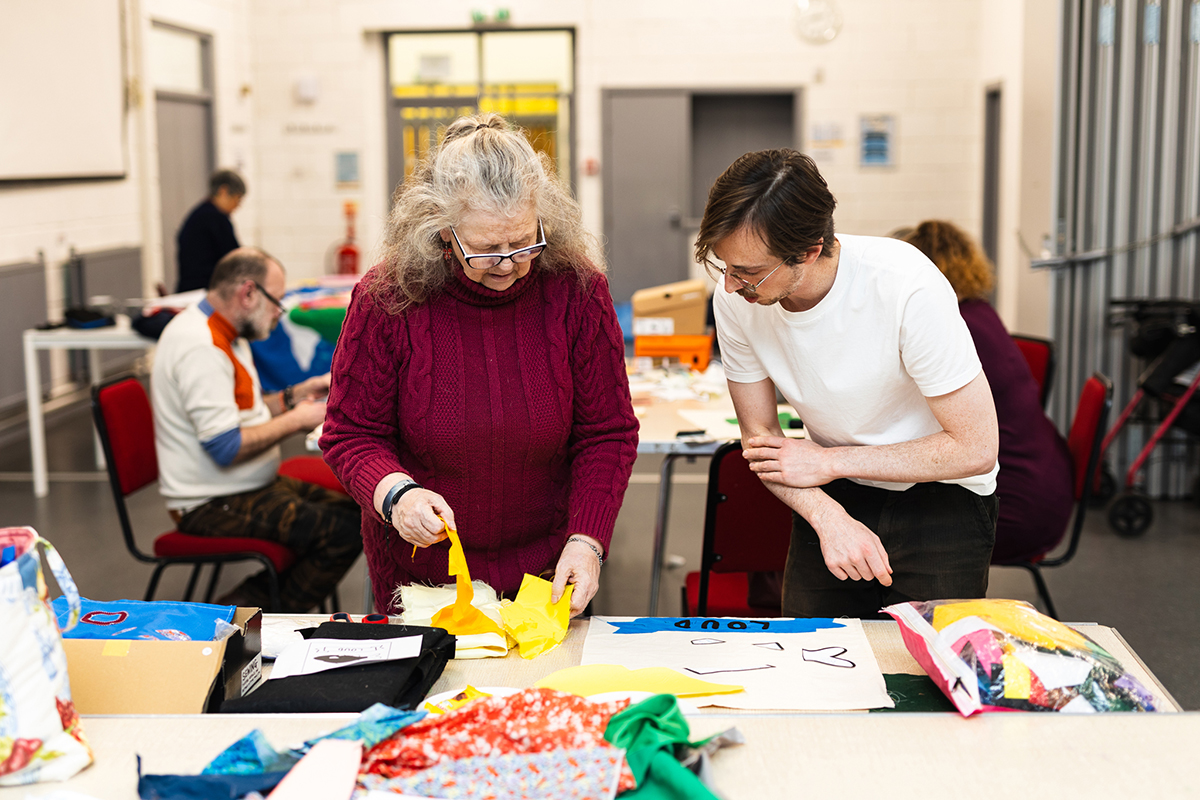
Throughout the project, the residents were taught textile and sewing techniques while contributing their own ideas on what makes Salford, Salford. Following a period of what Emily describes as “weird warmup activities” – including drawing one piece in a group or with one’s eyes closed – they noticed key themes appearing time and time again. “From all the group activities that we’d done, we came up with the key ideas that kept re-emerging,” they say.
“Then Chris worked on the design, and we presented it to the group to make sure everyone was happy with it, and then we began sewing together.”
Work on the banner project went forward alongside a host of other projects celebrating the anniversary. The wider Salford Voices exhibition, created by Art with Heart, includes a special Centenary Celebration Book which will be specially displayed with the banners, where visitors can write and reflect on what they think Salford may look like a century into the future.
Following the enthusiasm of the Broughton Community Centre residents, Emily says their reactions only cemented their view that the arts are “a fundamental part of being human”.
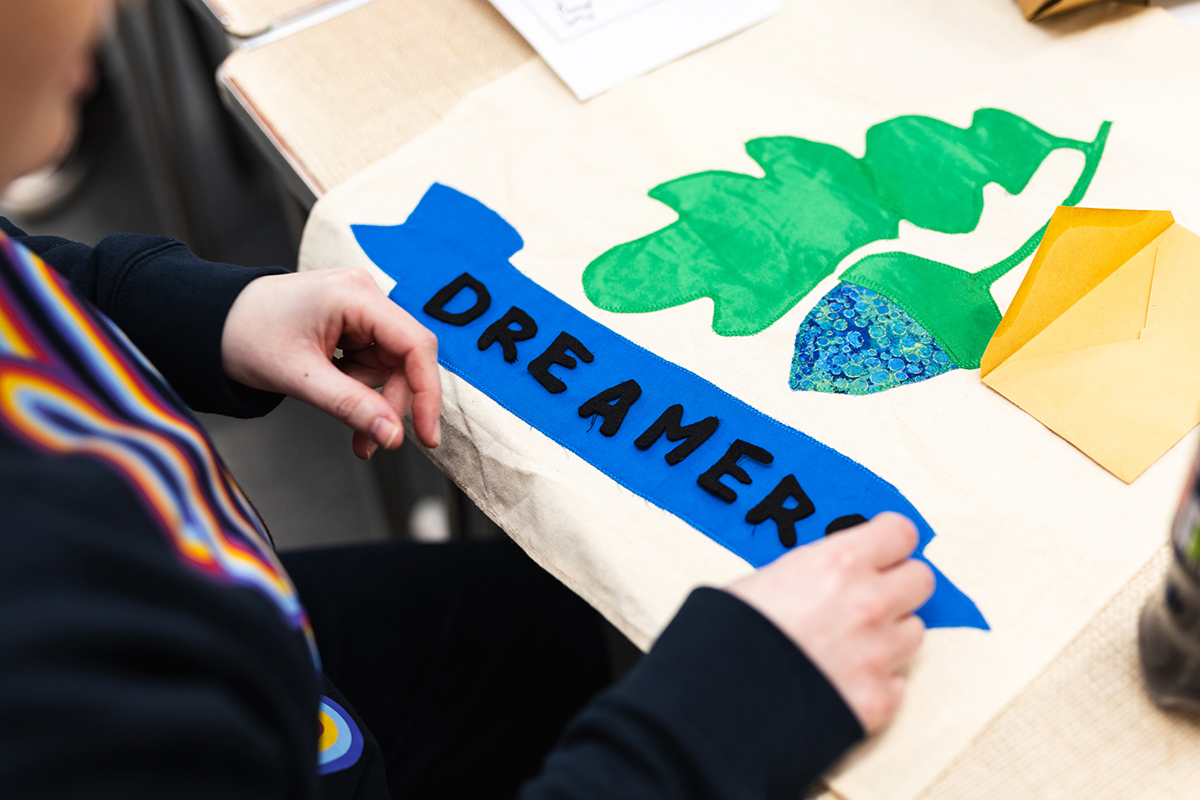
“Everyone should be given permission to be creative on the daily, as regularly as they want,” they say. “More often than not there’s people that had a love [for art] as a child, and then just haven’t been given the space – or haven’t felt they have permission – to continue.
“This group was largely quite creative, but many in different ways that they wouldn’t see as ‘art’ – there were a lot of crocheters and knitters. There was one person who used to sew quite a lot, but hadn’t done so in years, and had really lost the confidence and felt like it wasn’t something she could do anymore. It was really nice to see her get back into it and build that confidence back up.”
Far broader than the effect the project has had on the Broughton Community Centre residents is the affect it will have on other Salfordians who come to visit. Thanks to access consultant Ada Eravama, steps have been taken to ensure the exhibition is accessible for people with visual impairments through texture displays and audio descriptions influenced by the residents’ input. When the exhibition finishes in early May, the banners will be toured across the region to be enjoyed by as many people as possible.
Given the ever-present flurry around Salfordian heritage, it’s easy to wonder what crowds may be encouraged to consider at the exhibition. According to Emily, however: “It’s open to interpretation.
“I’d like it to be a space for [Salfordians] to reflect on their identity in their community, who makes up the city, and about how diverse and unique it is. I want them to try and think about the people around them, because as the banner says, there’s strength in community.
“It’s very vibrant and full of lots of different colours and textures, so hopefully people could bring a bit of colourful joy with them as well.”
Art with Heart’s Salford Voices Exhibition at Salford Museum and Art Gallery is free and drop in – running from Saturday 21 February to Sunday 10 May 2026.

 Holly Critchley
 Anastasia Tirca
 Carmel Thomason