 Carmel Thomason
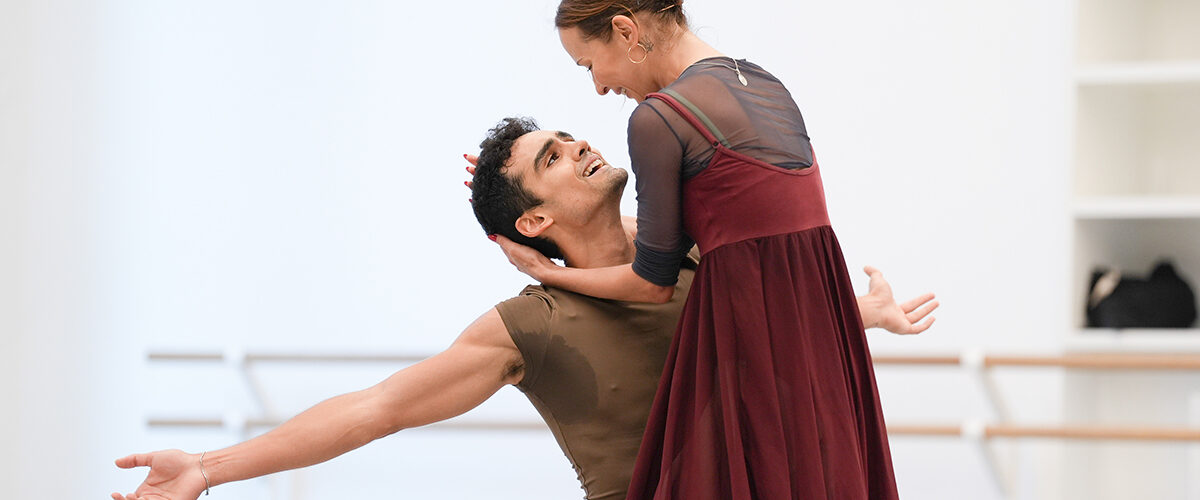
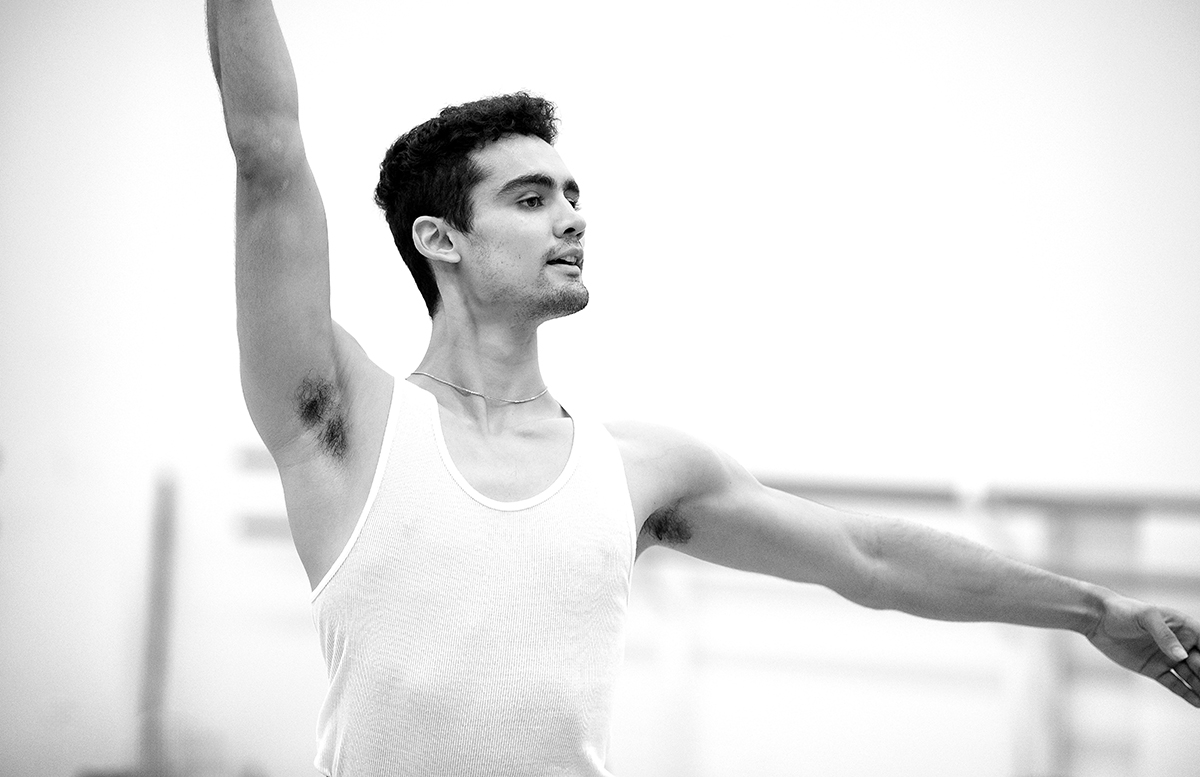
First Soloist Daniel McCormick is performing his debut of Romeo during English National Ballet’s Manchester run of ‘Romeo and Juliet’ at the Palace Theatre. He talks to Carmel Thomason about preparing for the role, the Montague–Capulet rivalry, and how he keeps going through one of ballet’s most demanding productions.
You came from San Francisco and Houston Ballet to ENB in 2017 and rose to First Soloist by 2022, dancing roles from Albrecht to Lescaut. How has that journey prepared you for this role?
Daniel: “I feel very fortunate to have been exposed to such magnificent dancers and role models over the course of my career. I have learnt that most of the time it is far more valuable to listen than to speak. I have learned so much by observing dancers and artists I admire. Skills like pacing my mind and body, proper preparation, being present in the moment, noticing the small things, and including the characters around me are some of the strongest lessons I have taken with me. In terms of my own experience with dancing big ballets, I have learnt that, after hundreds of hours of hard work in the studio preparing for a role, there comes a time where all the information has synched and your body becomes ready for that final moment on stage. The challenge then becomes getting your mind to finally trust yourself and the work you have done so you can surrender to the music, the moment, and just let go. I have learnt that it is more important to have fun and truly live that experience than it is to focus merely on being perfect. I think that is what resonates the most and makes you visceral to the audience and also what makes you human. If you feel it, they will feel it. If you believe it, they will believe it!”
Rudolf Nureyev created this production of Romeo & Juliet nearly 50 years ago. Have you watched other dancer’s interpretations and how do you make Romeo your own?
Daniel: “I think I have watched every single interpretation of the role that is available on the internet and within English National Ballet’s archives in regard to Nureyev’s production of Romeo & Juliet. Shakespeare’s story is iconic for good reason. I truly do not get tired watching others tackle this beast of a ballet. I’m a total bunhead and I wear it with pride! I love watching how every dancer who has danced these roles has a completely different interpretation and taste for their characters, whilst keeping the integrity of Nureyev’s choreography and vision. It fills me with total excitement knowing that now I will have the opportunity to write my own story within it with my incredible Juliet, Katja Khaniukova (who is a breathtaking dancer and actress by the way). For those two hours of our lives, Katja and I will truly become Romeo and Juliet!”
The ballet is based on Shakespeare’s play, with the feuding Montague and Capulet families. How do you build that gang energy on stage?
Daniel: “The hatred between each family is evident and loud. From the difference in colours worn in their attire, to the distinct contrast in their behaviour and demeanour. The rivalry is as old as the stones paving the streets of Verona. The choreography does an excellent job establishing this relationship. It helps me to compare the sentiments almost like those of stray dog vs. stray cat. Even the smell of one another is enough to get riled up about. But for Romeo, as soon as he lays eyes on Juliet, she becomes the lone exception. Her beauty and tenderness can turn marble into cotton in an instant, and Romeo is completely overtaken by her, so much so that being together becomes the only thing that truly matters to him.”
Prokofiev’s score is played live by a full orchestra, including the famous Dance of the Knights. Why do you think that scene is so iconic?
Daniel: “The moment that famous theme begins, with its heavy rhythm and pounding bass, you immediately feel the weight of the aristocratic world of the Capulet family. It almost sounds less like a celebration and more like a display of authority. It is the perfect musical representation of pride and power and I think it is truly timeless. It is also starkly contrasting to the scene directly after, Juliet’s entrance into the ball, which is a musical interpretation of her youthful spirit and innocence. Prokofiev is truly a master at conveying mood and the music throughout the entire ballet is captivating. It is at times dark and eerie and in others energetic and joyful. If you are listening for the first time, the score will catch you by surprise and you will never know what to expect in the best way possible. He is my personal favourite ballet composer.”
Romeo and Juliet runs 2 hours 55 minutes with two intervals, and Manchester has two shows on the Saturday. How do you pace yourself physically and emotionally through the role?
Daniel: “This ballet is extremely demanding. You truly leave your soul on the dance floor. I need to make sure I get plenty of sleep and food the day before the show. I make sure I have some sugar between acts. Maybe a chocolate bar or some apple juice so I can keep my physical energy going throughout. Quick release carbohydrates are essential. I have myself a proper warm up, stretch, and go through choreography as well as manage any props I will be working with. I personally also like to spend a few minutes meditating before the show to make sure my mind is completely clear and focused on the present. But in the end, it’s live theatre. You become a slave to the moment, and you are at its mercy. I think that’s beautiful and I truly relish in it”.
ENB pitches this as ballet “You feel as much as you see.” What moment do you think has the most emotional impact for audiences, and what’s happening inside you as you dance it?
Daniel: “That’s a tough question because there are far too many impactful moments in this ballet to pick from, but if I had to choose one, I would say the very last scene. The iconic death of both Romeo and Juliet. We are in each other’s arms for the very last time, souls intertwined for eternity. It is the most impactful scene emotionally. In that moment we are both physically exhausted and are being held up by pure feeling and storytelling. But at the same time the ballet is about to end, in this scene you get the culmination of all the emotions we have been brewing for the past two hours, a true climax. It is powerful and can be felt even if sat at the very last row of the grand tier level of The Palace Theatre”.
The tour runs from the Liverpool Empire to the Palace Theatre Manchester, then on to Southampton’s Mayflower and the London Coliseum in January. How do you maintain your training routine while on tour?
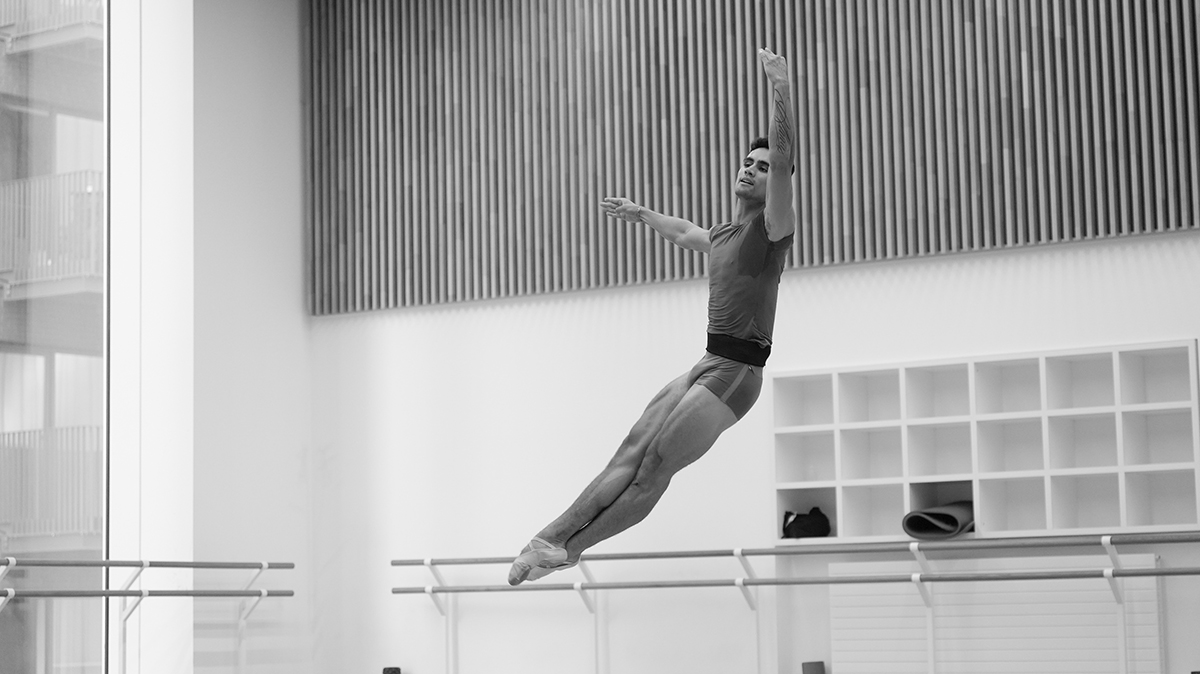
Daniel: “Ballet class. Every single day. It is crucial for tuning our instrument. But it’s also 1 hour and 15 minutes where the entire company does one thing collectively in harmony. It is a ritual as much as it is physically useful. Without it, it would be like running a marathon without tying your shoes. Borderline impossible. We are also rehearsing between performances to make sure everything stays in tandem and secure. There is little time to rest once we are in full swing, but we wouldn’t want it any other way”.
For someone in Manchester who has never seen a ballet before, why should Romeo & Juliet be their first?
Daniel: “Romeo & Juliet is a ballet about people. Not about fairies, nymphs, or mythical creatures. It’s as human as it gets and a production which the audience can truly relate to. It is a story about friendship, betrayal, violence, family drama, and love. It will leave you feeling moved and inspired and it will bring you closer to those around you. Not to mention, it is full of impressive and captivating ballet steps with the entire company in top physical form. I think if ENB’s Romeo & Juliet is somebody’s first time watching ballet, they will leave The Palace Theatre absolutely hooked and wanting to see more!”

 Anna Ryan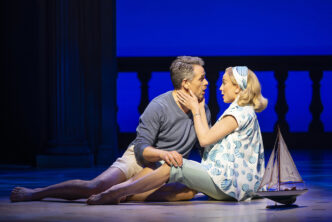
 Simon Button
 Amy Corringham