 Carmel Thomason
When Dr Feelgood guitarist Wilko Johnson was given a year to live in 2012, he turned down treatment and set off on a farewell tour of the people and places that shaped him. Then came an unexpected miracle – he lived another 10 years.
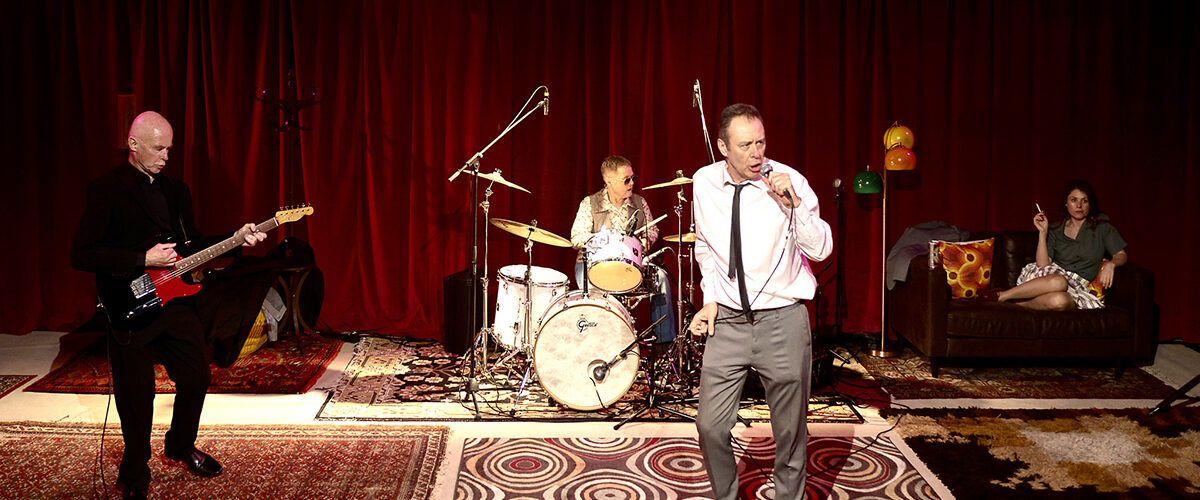
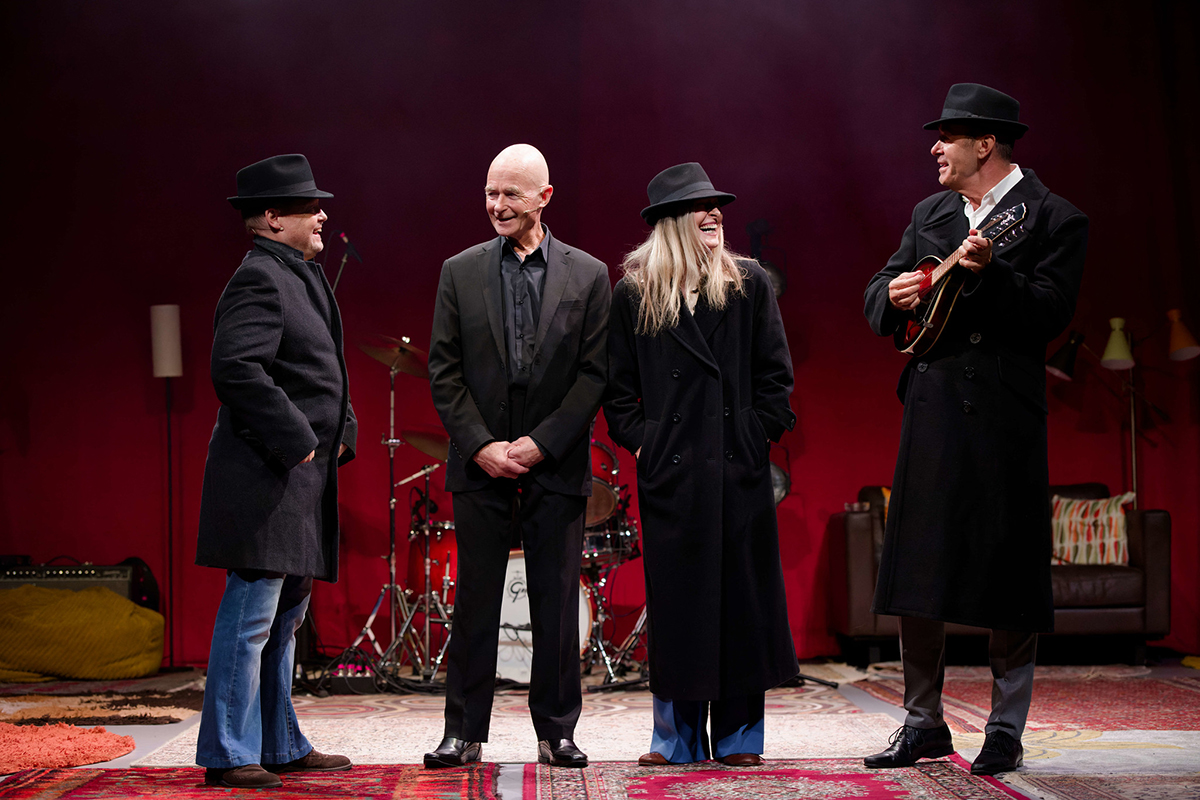
His extraordinary story is now on stage in ‘Wilko: Love and Death and Rock and Roll’, written by Jonathan Maitland, which arrives at the Lowry, Salford on the final stop on its first UK tour. Part biographical drama, part gig, it features live music and special guests, who have previously included Norman Watt-Roy (Ian Dury and the Blockheads, the Wilko Johnson band), Billy Bragg, John Cooper Clarke and Chris Difford.
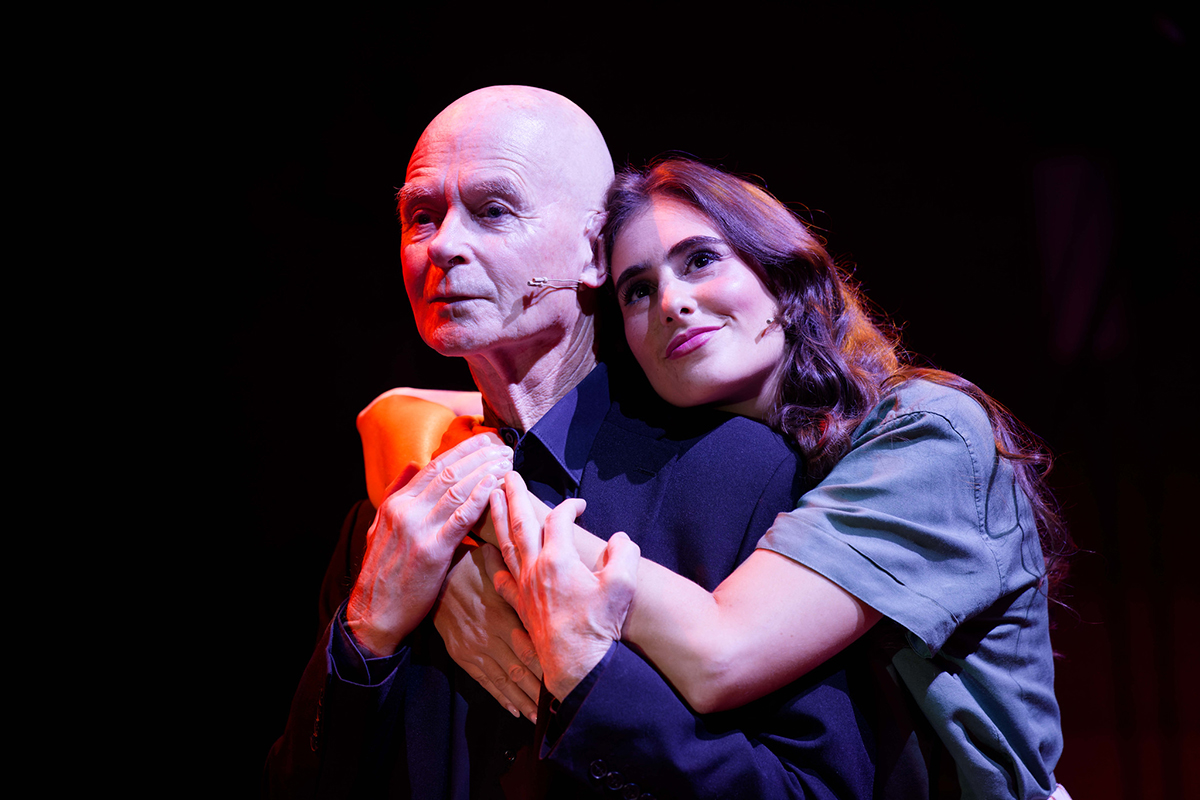
Wilko hoped to join the cast on stage for the encore, but he died a few months before opening night. He left the company a short, typically wry video message instead, and in the show he is played by Johnson Willis, a fellow Telecaster player who began on the same guitar as his hero and says that finding himself was the way to find Wilko.
With 2026 marking 50 years since Dr Feelgood’s ‘Stupidity’ became the first live album to go straight in at number one, we spoke to Maitland and Willis about telling Wilko’s story and why audiences should go home and play his band’s songs again.
You first read the play to Wilko at his home in Southend five years ago. What was that moment like, and how did his reaction shape the direction the play eventually took?
Jonathan Maitland: “It was a great moment and one I will always remember. Wilko nodded gently throughout and only stopped me once: when I made a reference to him sniffing coke. He launched into an extremely funny explanation of why I had got it wrong – it was actually speed, not coke – and that explanation made it, verbatim, into the play. And I’m pleased to say it gets a huge laugh every time”.
The show blends live music with storytelling and Wilko’s own words. How did you decide where his voice should speak directly to the audience versus where the drama needed to take over?
Jonathan Maitland: “Wilko relayed information in an amusing and unique way, so when we needed to tell the audience autobiographical stuff – ‘the album went to number one and we were suddenly the biggest band in the world, for five minutes’ – we let him say that directly to the audience. But in the case of arguments – and Wilko had a lot of them! – we always opted to show that as drama, as it showed what kind of a person, he was: stubborn, funny, maverick and edgy”.
You’ve written previously about real, often controversial public figures — Jimmy Savile, Boris Johnson. How did writing about Wilko, someone you knew personally and who was involved in shaping the piece, differ from those projects?
Jonathan Maitland: “I didn’t know Wilko that well, but I had followed his career all my life and he wrote a fantastic autobiography, and there was also a terrific book about the band by Zoe Howe, so I had plenty of Wilko’s original words to go on. He was a fantastic writer – better than me, if I’m honest – so initially it was a question of taking his ‘Best bits’ – and then shaping a narrative around that”.
The tour has featured guests like Norman Watt-Roy, Billy Bragg, John Cooper Clarke and Chris Difford. How much does the show change or flex depending on who’s appearing on a given night?
Jonathan Maitland: “It’s always great to have someone like Billy Bragg or Nine Below Zero or of course, Norman, Wilko’s great musical accomplice, playing with the cast at the end… It’s really the cherry on the cake. But the cake, of course is the main thing! But the fans of people like Billy and Norman really add to the atmosphere so it’s win-win all round”.
Dr Feelgood are widely credited as godfathers of punk, influencing everyone from the Sex Pistols to the Ramones. How much of that wider musical legacy did you want the play to carry, versus keeping the focus tightly on Wilko as an individual?
Jonathan Maitland: “The band are an essential part of the story: indeed, as one of the characters in the play says to Wilko, ‘We were much more successful after you left.’ It’s the story of the band AND Wilko, really: but he takes Centre Stage, because of the remarkable person he was, and the remarkable things that happened to him”.
This year marks 50 years since Stupidity became the first live album to top the UK charts in its first week of release. Does the show mark that anniversary in any way, and how do you see that album’s place in Wilko’s story?
Jonathan Maitland: “The show absolutely celebrates that anniversary, as it hit number one in October 1976 and that’s exactly when the Tour is taking place! The play makes reference to how big the band were, then, and indeed now: one of the biggest laughs of the night always comes when one of the characters says to Wilko, trying to explain why the band were, and are, bigger than him: ‘Do you know how many Dr Feelgood tribute bands there are in Spain, alone, now, in 2026? Twenty-seven’.”
Was there ever a plan for Wilko to appear in the play?
Jonathan Maitland: “Wilko survived for 10 years after his initial 12-month diagnosis: it was, medical experts agree, quite a miracle. The original plan was to have him join the cast on stage, playing guitar and singing, for the encore. And he was hugely up for that. But sadly, he passed away a few months before opening night. But in typical Wilko fashion he recorded a very funny short video for us, preparing for that eventuality: ‘There’s a chance I’ll be brown bread on opening night: and there’s not a lot I can do about that is there? But whatever happens, I hope everyone enjoys the show’.”
It’s now the show’s first full national tour, and sadly Wilko isn’t here to see it. What do you most want audiences meeting his story for the first time to take away from it?
Jonathan Maitland: “I want them to be moved, entertained, and think what a character, what a story, and what fantastic songs and then to go home and play them… Repeatedly. They still sound absolutely fantastic. Fortunately, that’s what has happened throughout the play’s life, and we are thrilled about it. It’s a guaranteed good night out, really: and that that’s something we all need”.
You come from a music background as well as an acting one. How did that shape your approach to embodying Wilko’s very particular playing style and stage presence, rather than just “acting” the part of a guitarist?
Johnson Willis: “Luckily there were many things that fell into place because of my own musical journey. My first electric guitar was a Watkins Rapier, so was Wilko’s. I got a Telecaster in 1972. Wilko had a 62 Telecaster. I played in bands about the same time as him and with some great musicians whose lifestyle was equally as indulgent. Having said that Wilko’s playing style is unique and I’m still trying to work it out. But then he claimed to have never mastered the technique of his idol, Mick Green so we had that in common. I quickly discovered that in many ways we were already alike so if I could find myself then maybe I could find him”.
Wilko was famous for his intense, almost trance-like stare and machine-gun guitar movements on stage. How did you go about learning and physically internalising that, and how long did it take before it felt natural rather than mimicry?
Johnson Willis: “There’s a lot of material online that illustrates his movement but really, it’s the music itself that dictates the physicality whilst playing. The down stroke speed of his strumming hand is in itself machine like. The striding across the stage and the head movements are pure showmanship. It’s not aggressive, it’s youthful play acting and a lot of fun. As Wilko said ‘I’m a pussy cat really’”
This show mixes live music with dramatic storytelling. What’s the challenge of switching between ‘performing a gig’ and ‘performing a scene’ within the same show, sometimes within the same few minutes?
Johnson Willis: “There’s not really a switch. It’s written to effortlessly slip through all the stages in the life of one extraordinary man. The audience is invited to ‘Behold the Universe’ from Wilko’s point of view and from then on, it’s one hell of a journey”.
Unlike a lot of the roles in your career, Wilko was a real person whose family, friends and fans have seen this show and could be in the audience on any given night. Has that changed how you approach the performance compared with playing fictional characters?
Johnson Willis: “It was something that I thought about a lot. Wilko features in many people’s lives. From the moment his son Simon came in to see us in rehearsal I knew this had to be real. It was clear that this was a drama, but I knew the fans would want to see him as they remembered him and that Wilko would have wanted them to be able to do that. From the reaction of some of his closest friends and fans I’d say Wilko would be pleased. Did I use a different approach to this role, no not really but I did get a lot of help from above”.
The production has featured guest appearances from real musicians who actually knew and worked with Wilko, like Norman Watt-Roy. What’s it like sharing the stage with people who were part of the real story you’re portraying?
Johnson Willis: “Well, it’s been amazing having such brilliant people guesting at the end and we all love Norman and Simon Johnson who have supported us from the beginning. The biggest thrill though is being part of and playing with the band we are in the show every night”.
You’ve worked across everything from RSC Shakespeare to jukebox musicals like Amelie. What did all that range give you that made you right for playing a character as singular as Wilko Johnson?
Johnson Willis: “Calling Amelie a jukebox musical may well raise an eyebrow or two but yes theatre is a constantly evolving form and when I was in one of the first actor/musician shows called Return to the Forbidden Planet in 93 which married Pop/Rock with Shakespeare, I didn’t know how much that genre would capture the imagination of theatre goers. But for Wilko Love Death and Rock’n Roll it’s really about going back to where I started as a boy, where Wilko started, standing on the seashore, looking out at the ships steaming past and wondering what the flip am I going to do now”.
Wilko: Love and Death and Rock and Roll is at Lowry, Salford from 12-14 November 2026.

 Anna Ryan