
 Catherine Jones
The fight that took place in the long hot summer of 1995 wasn’t on the beaches, in the fields or in the streets, but rather on the airwaves, in record shops and across the front pages.
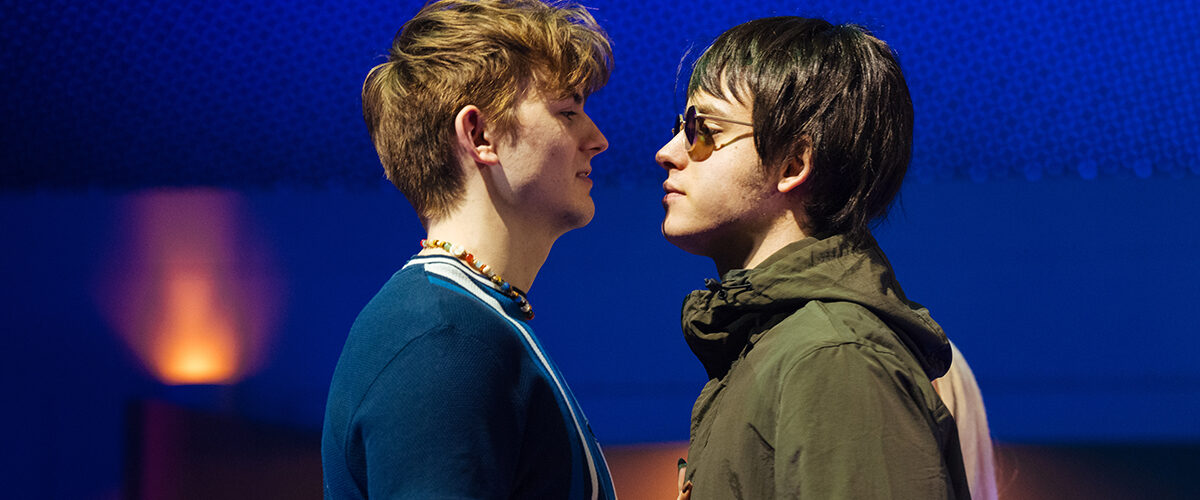
Now arguably the biggest showdown in pop history has opened a new front – on the stage, with ‘The Battle’ transporting modern-day audiences back into the midst of what has been described as ‘the sweaty mid-90s carnage of the Battle of Britpop’.
Blur verses Oasis, art school intellectuals verses plain-speaking working-class lads, South verses North. The battle lines that were drawn then are revisited here in writer John Niven’s swaggering and audaciously funny story.
But while the production is infused with the sounds of the Britpop era, anyone expecting a 90s jukebox musical or a live gig may be in for the first of several surprises.
“We’re much more interested in the drama of their lives than in the drama of the music,” explains ‘The Battle’ director Matthew Dunster. “Really, it’s a play about friendship and ambition, and how the latter might break the former.
“When John thought about the events, in his mind he thought it could be like a sweaty David Mamet play where people were in rooms, and the emotional temperature is ramped up a little bit more with each scene.”
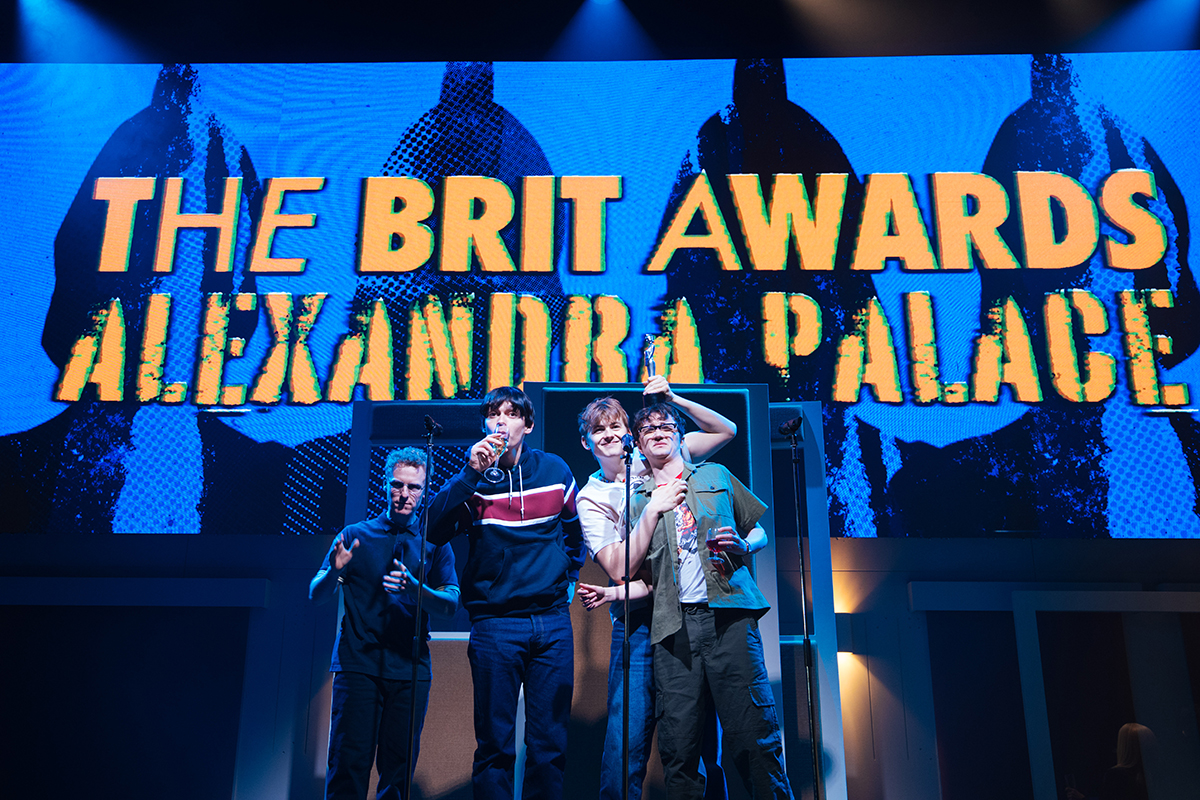
Thus, this battle unfolds not on amp-stacked stages in front of thousands of music fans, but on the fringes of award ceremonies, in recording studios, pubs and dressing rooms, beyond VIP ropes and at home behind closed doors.
Dunster was approached to join The Battle’s creative team early on and has worked closely with first time playwright Niven to recreate the intense, simmering sense of rivalry and rising tension underpinning the real-life 90s clash which spilled over from the charts and tribal fan factions and into the wider public consciousness.
It’s an era both know well – Niven as a former A&R (Artists and Repertoire) man in the record industry and Dunster as a music fan who was there in the middle of it.
“As soon as I heard ‘Battle of the Bands’ it transported me straight back,” says the director, who reveals he saw Oasis play their fourth ever gig when they supported his friend’s group at The Hurricane Club in Oldham.

As for the ‘battle’ itself, he says he bought both singles and “was more excited about the event and the competition than taking sides.”
“I think I was probably emotionally team Oasis,” he admits, “but artistically I thought at that point that Blur were streets ahead. Then in the next 12 months, Oasis released ‘(What’s the Story) Morning Glory?’ and from that point on…it was all Oasis.”
Meanwhile actor Mathew Horne was a music-mad 16-year-old, although he too maintains he didn’t mind who won the chart-busting head-to-head.
“It probably sounds like an actor being diplomatic, but from my experience, everybody I know was both Blur and Oasis,” says Nottinghamshire-raised Horne, who plays the late Blur manager Andy Ross, the man who signed off the decision to release Country House on the same day as Oasis’s Roll With It.
“My record collection is of equal size, and the number of times I’ve seen Blur and Oasis are the same too. And I think the outcome of the battle for number one didn’t really matter. What mattered was our movement, the thing we were part of, was suddenly seen by everybody.”
It means that alongside decades of storytelling experience, both director and actor bring with them first-hand knowledge of the cultural phenomenon that was Britpop.
Horne has also, rather like his character, found himself in the position of a kind of paternal figure to the young cast, some of whom weren’t even born when the real-life showdown took place and have scant knowledge of the time – a fact which, it turns out, has also informed the creative approach when revisiting the events of 30 years ago.
Dunster recalls: “When I was auditioning people I’d ask: ‘did you know about this?’, and they didn’t. They said: ‘I know about Blur and Oasis because my dad’s into them, but I didn’t know about this battle’. So, the audience (too) could be very split in terms of who knows the outcome and who doesn’t.”
But whether or not theatregoers already know what ultimately happens, he says “I think you’ve just got to play the stakes of the characters on stage. And they get increasingly wound up and neurotic and frazzled by the competition they’ve found themselves locked in. It’s the biggest thing any of them had ever been part of.”
Saying that, he adds: “Having been to see Oasis last year in Heaton Park, it was incredible how there was a real mix of people, from 16 to 65, and everybody seemed to be as into it, and everybody seemed to know every word to every song.
“It would be great if we had a similarly broad range of ages (in the theatre). That would mean people will get different things from it. I’m not afraid of the nostalgic side of it: that’s really good fun, exploring a moment in time.”
Meanwhile Horne, who also saw the Mancunians on their triumphant 2025 reunion tour, points to the current “huge zeitgeist of 90s nostalgia”. And it’s true that right now the music, fashion and culture of the final decade of the 20th Century is certainly enjoying a resurgence.
Between those who lived through the era, the music of the time being sought on streaming platforms and shared on social media, and with rappers Drake and Kendrick Lamar keeping the grand tradition of the music feud alive, ‘The Battle’ should hopefully resonate with everyone who sees it.
“At the end of the day if you have even a passing interest in music, which most people do, there’s something in there for you,” Horne says. “I’m really excited to see what people think.
“I hope we deliver for audiences on a nostalgic level. And I also hope that we deliver for them in terms of making a really funny piece of theatre – one with a huge, hilarious twist.”
The Battle is at the Opera House, Manchester from 17 to 21 March 2026.


 Holly Critchley
 Anastasia Tirca
 Carmel Thomason
 Leslie James Kerwin