
 Leslie James Kerwin
“Victims are male homosexuals and drug users who use needles… any of them could have contracted the Aids virus, and any of them could pass it on.”
A tinny radio blares across a dimly-lit haze of sweating bodies and tight leather trousers. Red and white lights pulse beneath thumping disco music as partygoers vogue across the stage. It’s 1985, and the terror of the Aids crisis has been temporarily turned away at the door, only for the threat to continue leering across the night nonetheless.

Fusing dance, circus, and drama, ‘Tell Me’ is the latest show from the mind of Sadiq Ali, a circus performer and leading HIV activist. Starring Phoebe Knight alongside Jonah Russell and Sadiq himself, Tell Me dances between the delicately intimate and sharply raw, as it follows the story of a young woman diagnosed with HIV and the wordless reflections of her past and present selves on navigating life with the virus.
The story is told in an abstract and interpretive haze, and its staging is striking, yet simultaneously earnest. Fleeting moments of sexual health clinics, queer nightclubs, and lovers’ disgust and tenderness swirl under a backdrop of harsh red lights and uneasy music, interrupted by bursts of radio chatter or, more soberingly, readings of letters from a man named Michael – the late brother of the show’s choreographer, Jonathan Lunn. As Sadiq describes in an interview with Quays Life, the letters were sent from Michael to his mother shortly before he succumbed to Aids-related complications, and became emblematic of the emotions of the Aids epidemic.

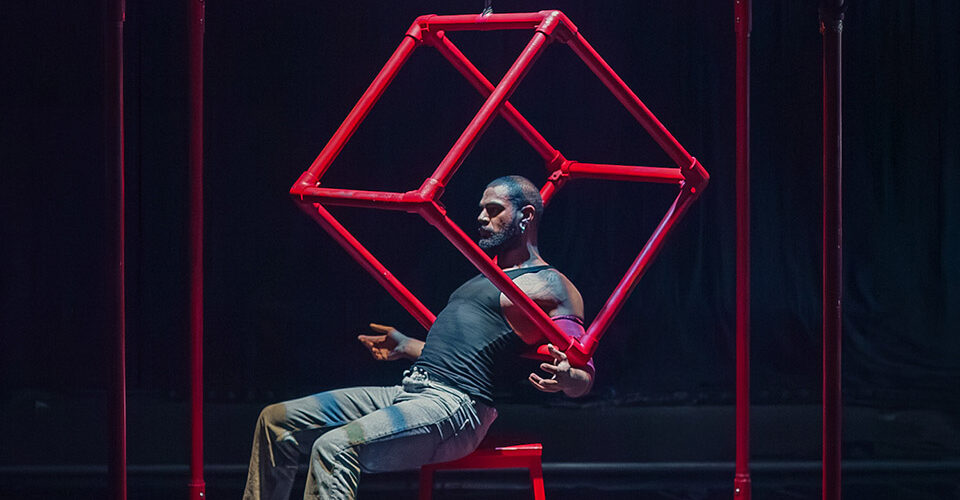
With characters, emotions, and settings constantly bending and changing, the show is anchored only by the presence of four red cubes. Three are used as varying sizes of Chinese Pole, while the fourth is wooden and hand-sized. It rarely leaves the woman’s sight after she is presented with it in the clinic: the physical weight of her diagnosis, omnipresent from beginning to end. Through cubes, HIV becomes something visible, used as a cage, a weight, and something climbable, conquerable, and reconcilable over the show’s course.
With the numbers now dropping among gay and bisexual men, straight men and women now make up half of all new transmissions in the UK. Paired with 2025 seeing both a government HIV Action Plan and funding cuts to HIV services, Tell Me illustrates a new chapter for HIV awareness in modern day Britain. In creating the show, the cast worked alongside HIV charities Positive UK and Chiva, which support women and children respectively, to more accurately showcase a woman’s experience of a diagnosis and better represent issues such as sexual shame and stigma. Further informed by her own life experiences, Phoebe Knight gave an incredible performance of a well-rounded and resilient character, and was an overwhelmingly magnetising watch on stage.
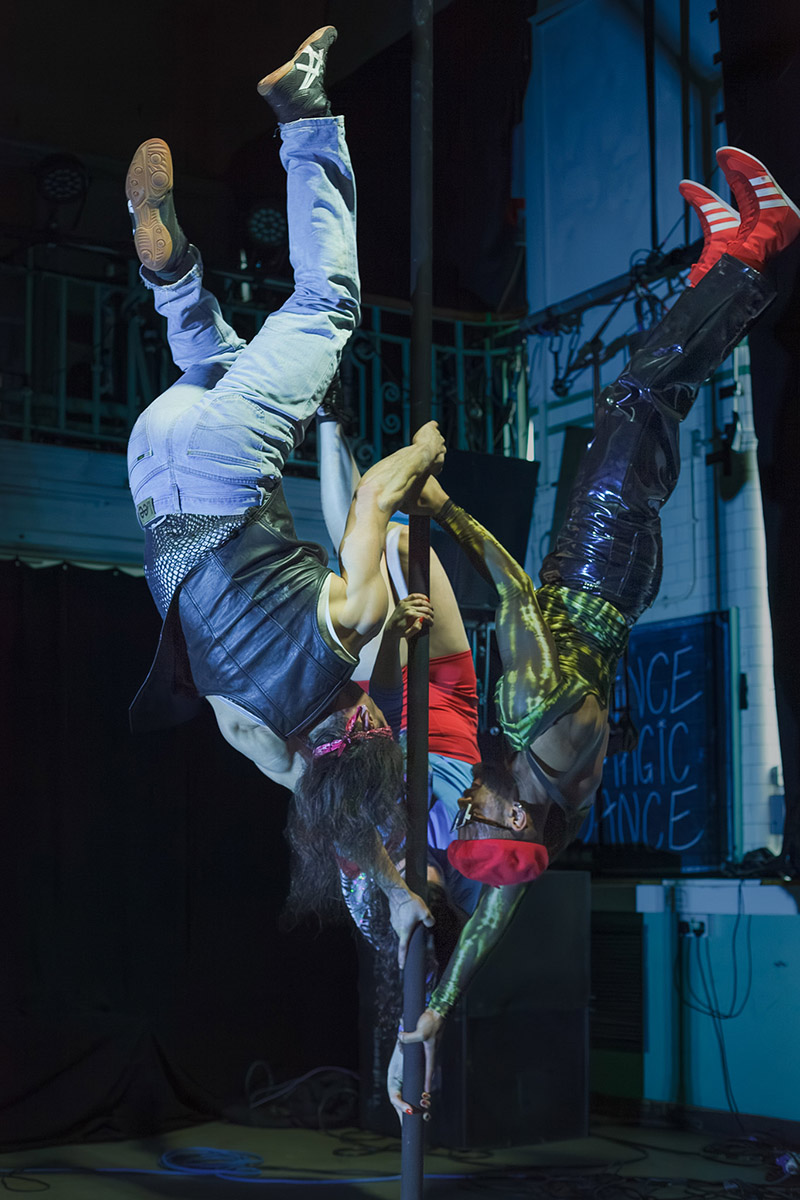
Truly gripping was the sheer acrobatic talent displayed across the cast, who seemed just as comfortable dangling by their ankles as they were rolling across the floor. Moments of intimacy were equal feats of strength as characters chased each other up and down poles and across the ceiling – sometimes in six inch heels, sometimes completely topless – with their only safety measures being their own strength. The trust between the three was palpable, and made the show’s emotional beats even more hard-hitting.
Debuting three weeks before National HIV Testing Week, Tell Me is a bombshell arriving at a turning point in HIV history. Deeply personal and dazzling in performance, it gives tribute to the horrors of the past while allowing itself to step forward into the present.
Sadiq Ali: Tell Me is at Lowry, Salford from 16-17 January 2026. Age recommendation 15+


 Carmel Thomason
 Dave Porter

 Steve Timms