
 Dave Porter
Think you know Manchester pretty well? It may be time to have a rethink. On hand to help adjust your frame of reference is former journalist Dean Kirby and his walking tours of Angel Meadow. Now a local historian and author, Dean’s tours poke around in Manchester’s industrial undergrowth to unearth minute treasures of long-forgotten history.
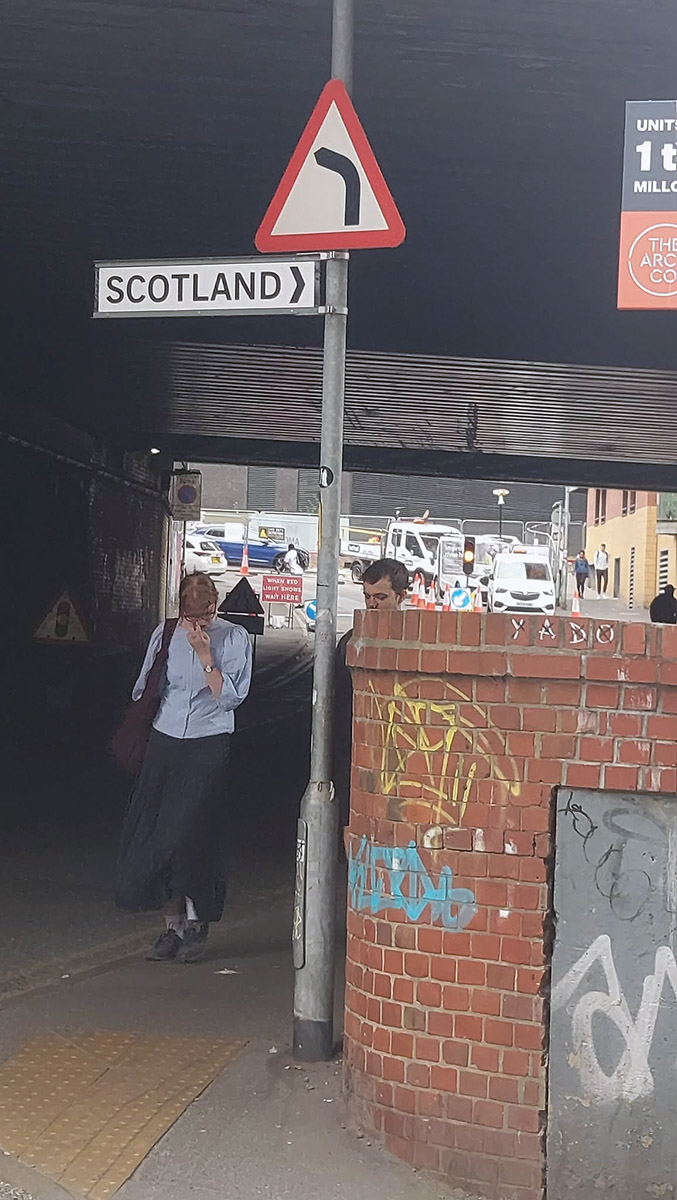
Did you know for example that ‘Scotland’ was in Manchester? That the area of Angel Meadow – tucked quietly away behind Shudehill – was the place where Irish immigrants settled in the city after fleeing the potato famine? Or that on a Saturday night you could win a bounty if your dog killed the most rats in the ‘rat pit’ of the local tavern?
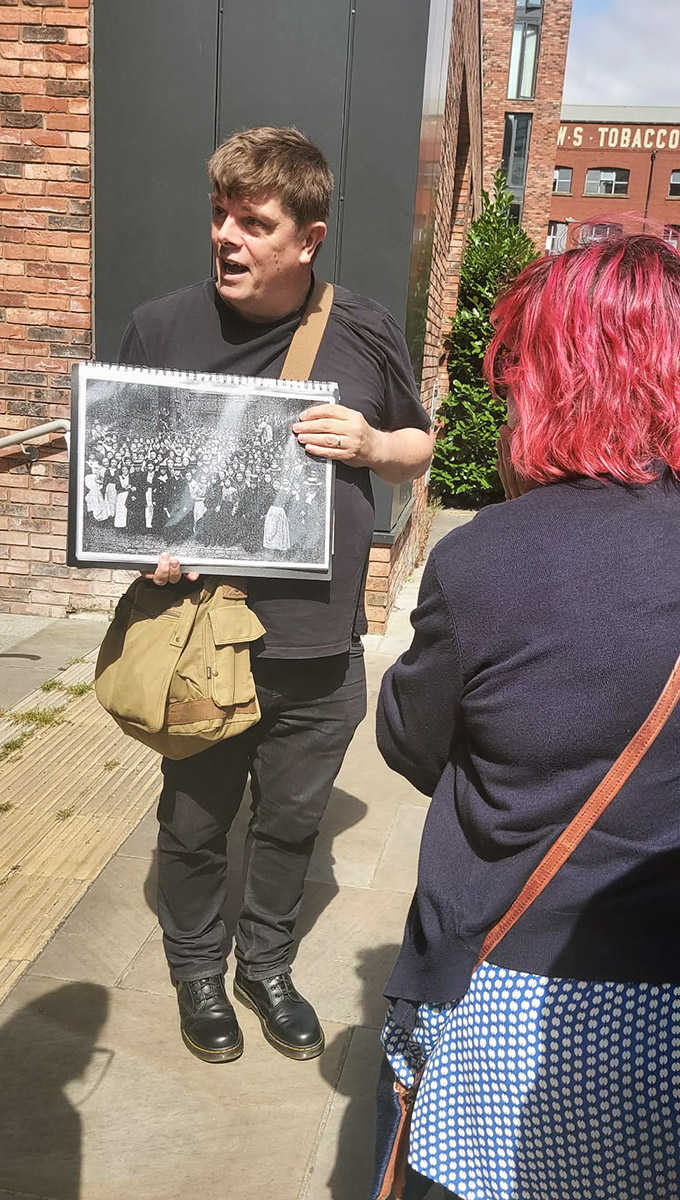
Such nuggets of information form the backdrop to Dean’s tours which tell the story of Manchester’s rise as the first industrial city and the particular role Irish immigrants played in it. He is not the first to retell the story of ‘Cottonopolis’ but what sets apart Dean’s casting of events off from others is the way he weaves personal stories – including his own family’s – into the rich tapestry of a well-known history.
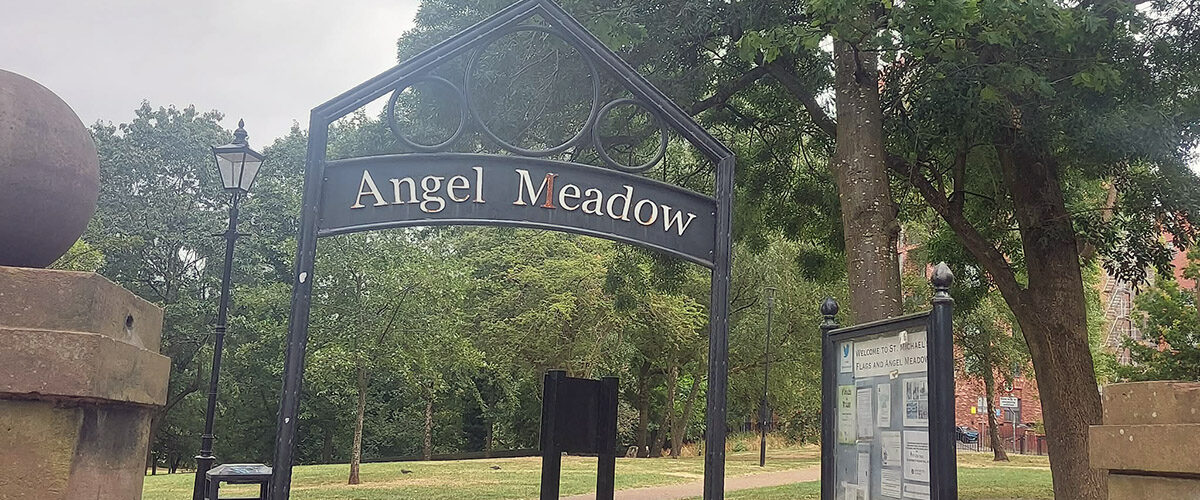
Engels described Manchester during the industrial revolution as ‘hell on earth’, meticulously detailing the wretched living conditions of workers living in slums such as Angel Meadow. The name Angel Meadow derives from its once pleasant vista looking out over verdant fields, a grimly ironic twist given the industrial hellhole it later became. Dean relates how swine herders in the city would drive their pigs up into north Manchester to forage before returning to the city at dusk, and how the well-to-do chose the area as a salubrious neighbourhood before it was engulfed by industry. The former large houses of the rich were quickly turned into dosshouses for the downtrodden by rapacious landlords cashing in on the need by large Irish immigrant families for housing of any kind.
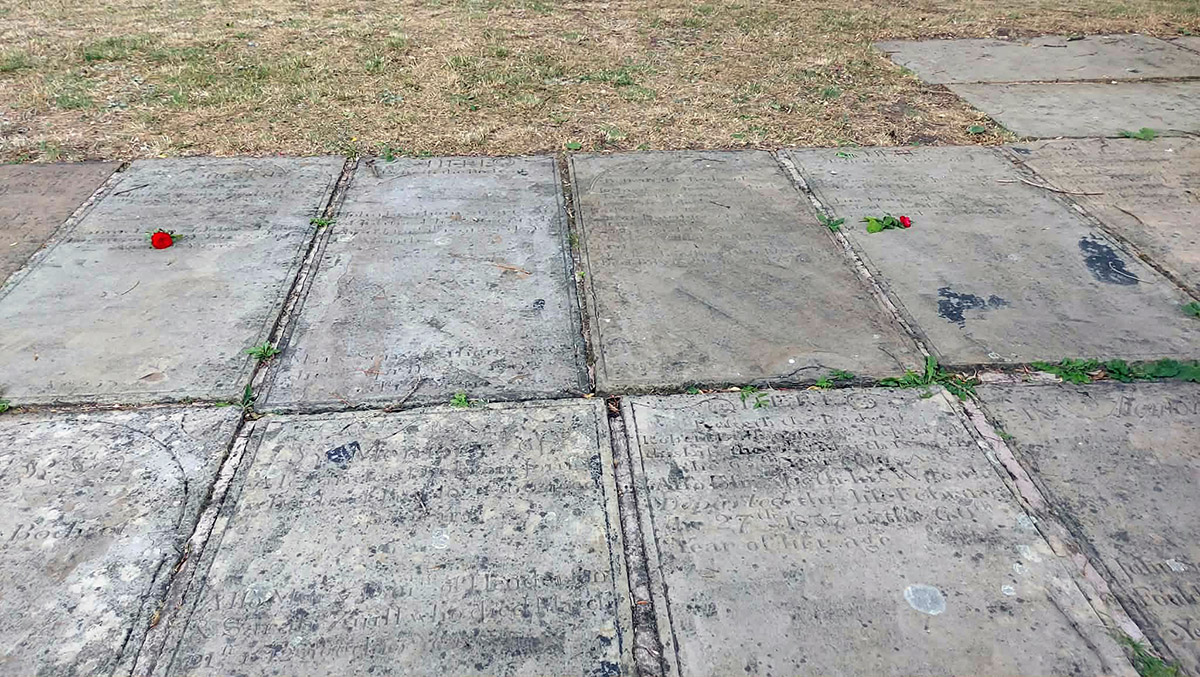
Angel Meadow is now represented by the park and the area known as St Michael’s Flags. Gravestones can still be seen to this today of families and a startling reminder of the times is witnessed in the tender ages of the children – as many as 9 in some graves – buried before their time by parents, such was the infant mortality rate. They were the lucky ones, Dean tells us, with the majority of people being buried in unmarked mass graves, corpses literally piled up on top of the other. Dean relates that the skeletons of such forgotten bodies would often rise to the surface of the park and young children would play football with the skulls. Not sure what they used for goalposts…
Angel Meadow park was also the venue for often-fatal bare knuckle fights on Sunday morning, started the night before in one of the local hostelries and continued the day after. At one particular fight between two toughs (both one-armed for some reason), it was reported that one assailant ‘bit’ off the hand of the other. Different times, as they say.
Hunger and random violence sums up what life was like for residents of Angel Meadow. Dean recounts a story of one poor soul who died from burns after he was engulfed in flames, pursued as he was by a neighbour with a lamplight who set him alight following a drunken altercation with his sister. The guilty party received just five months for manslaughter, but was later sent to jail for five years for stealing lead pipes. As Dean reminds participants on the tour, the Victorians prized property above human life.
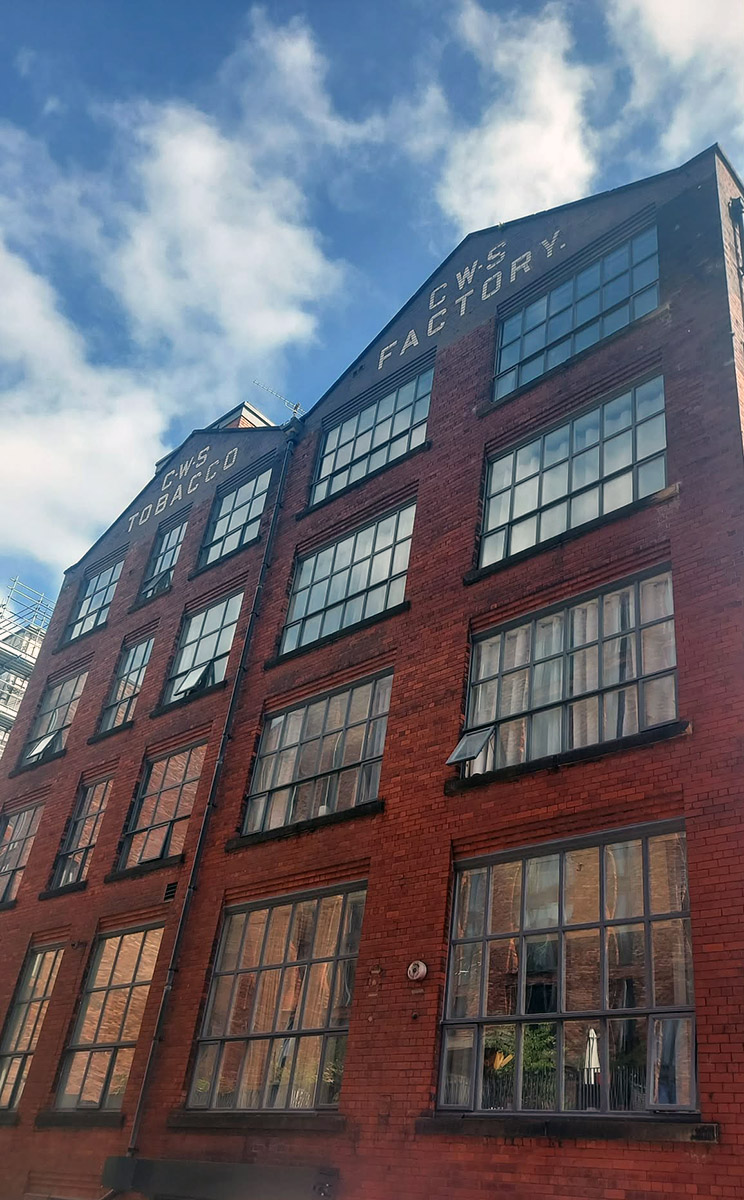
The tour ends with a reminder of the prominent role that the Co-op (Cooperative Wholesale Services or CWS as it was known) played during this and later eras. The area around Angel Meadow is stacked with former CWS buildings, such as the tobacco factory, many of which have been repurposed for flats and residential living. Also noteworthy are the various ‘ragged schools’ which adorn the neighbourhood for children of the poor.
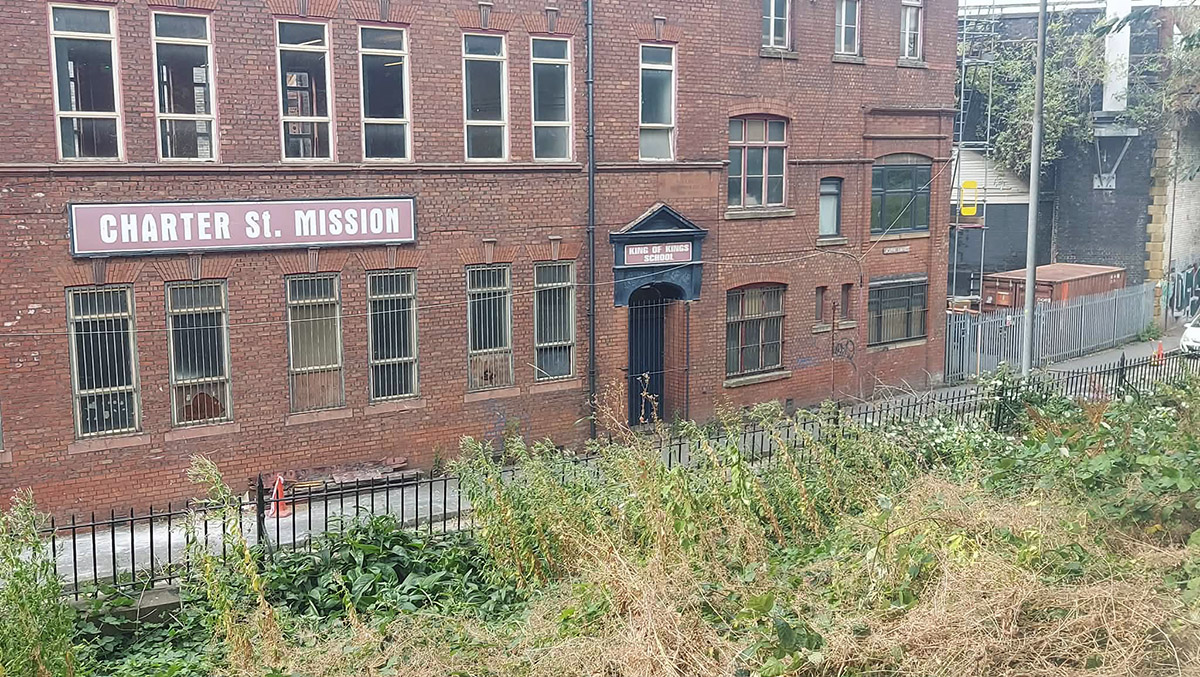
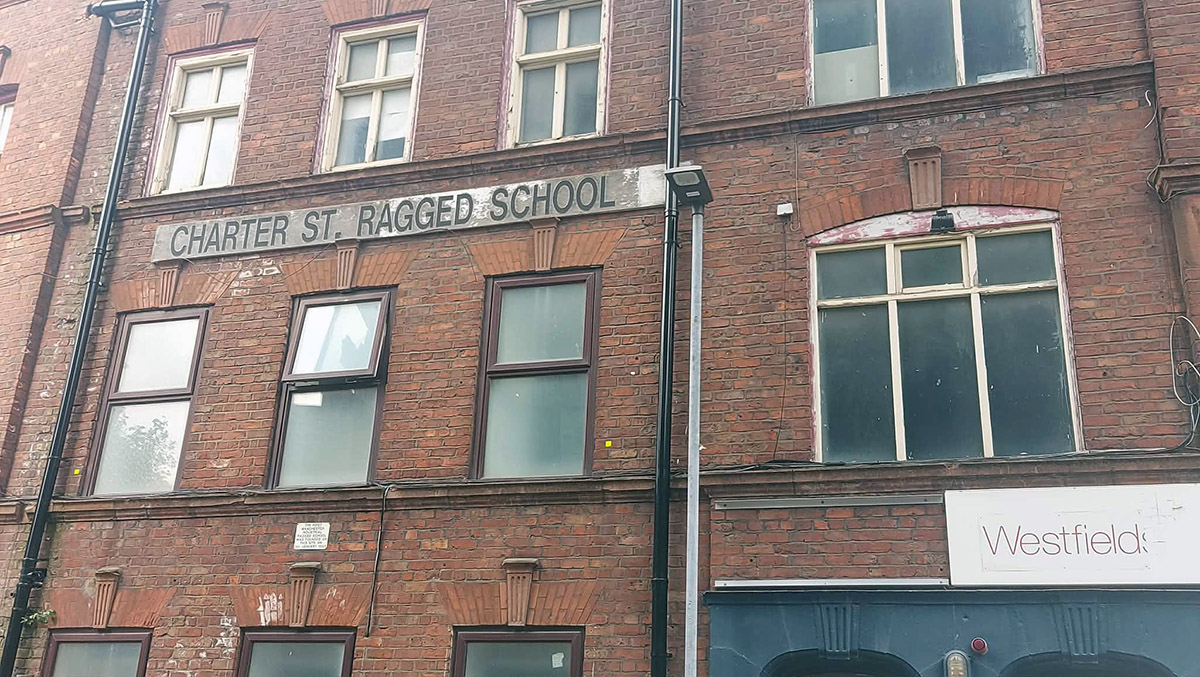
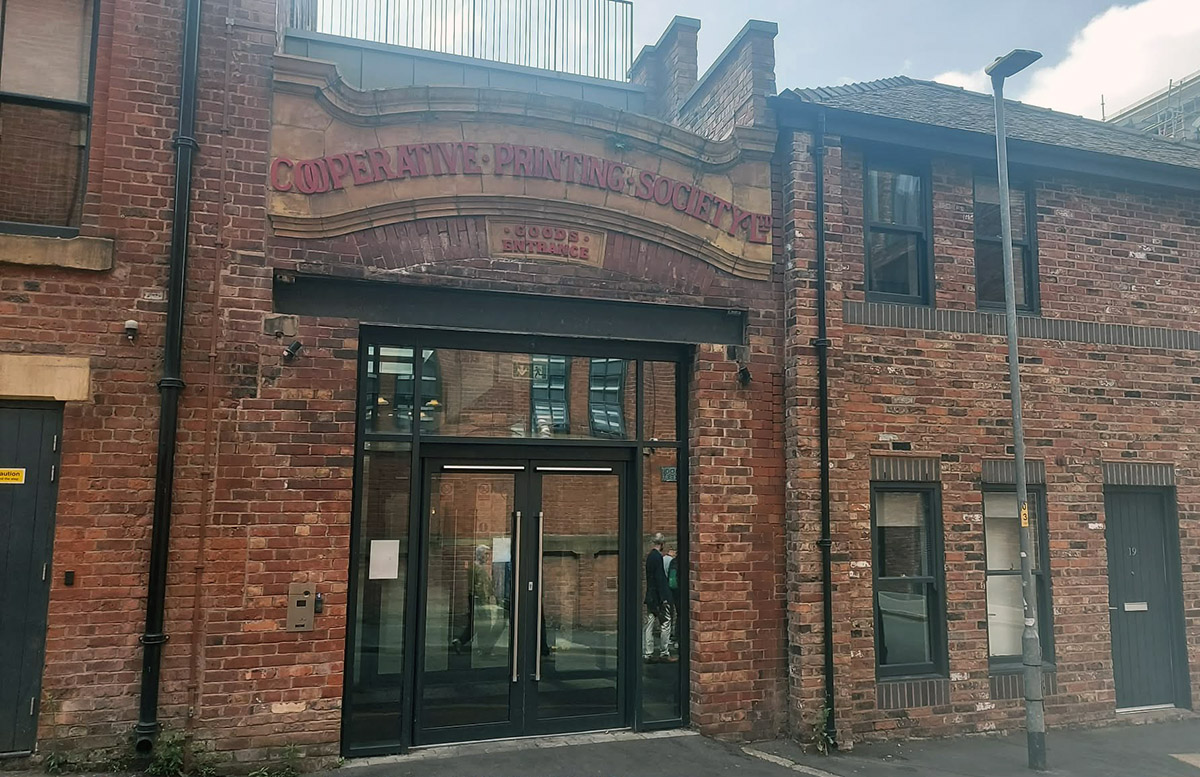
Dean’s tour of Angel Meadow is full of rich detail about the city’s industrial heritage and he is a natural raconteur, warm and witty and an illuminating guide. His latest book about Manchester’s Victorian gangs, The Scuttlers (think the city’s answer to Peaky Blinders), will no doubt cement his reputation as a keen observer of municipal history.
And if you want to know why Scotland is in Manchester, you’ll just have to take the tour yourself.


 Simon Button
 Amy Corringham
 Carmel Thomason
 Lorraine Worsley-Carter