
 Dave Porter
There’s a lot of talk of ‘Manchesterism’ at the moment and whether the rest of the country can benefit from it if Andy Burnham gets to become Prime Minister. But there is another side to this branch of economics and it has more to do with the spirit of the city.
Rory Mullarkey explores what it means to be a Mancunian past and present in his panoramic survey of who we are, our roots and the 1996 IRA bomb which became the turning point for Manchester to reinvent itself.
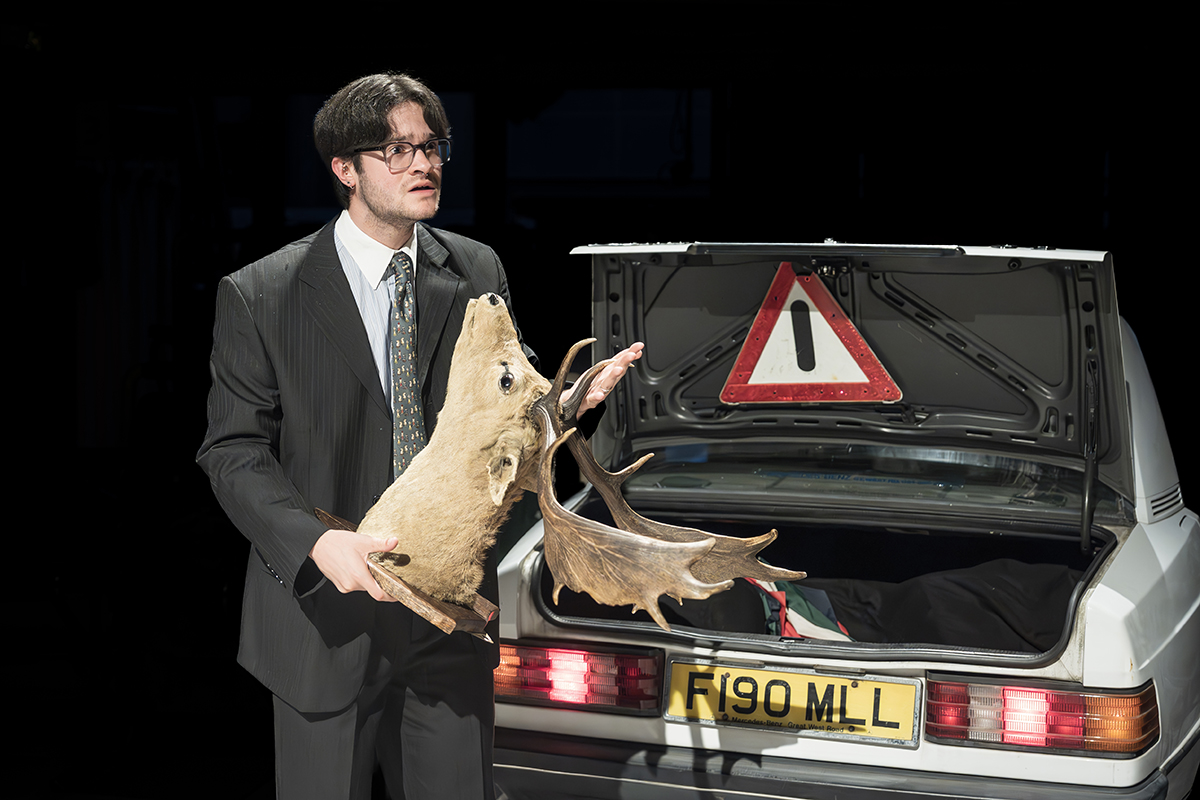
The play opens in Angel Meadow on St Michael’s Flags in the 19th century, with Irishwoman Annie Donovan swearing to revenge death on the person who killed her pig – also called Annie. Played by Elaine Cassidy with bulldozer energy, Annie strides across filth-ridden Angel Meadow and its salubrious characters without so much as a look-back. Everyone in the city is caught up in the grimy swirl of the industrial revolution, none more so than the Irish immigrant population filling up Manchester’s underclass.
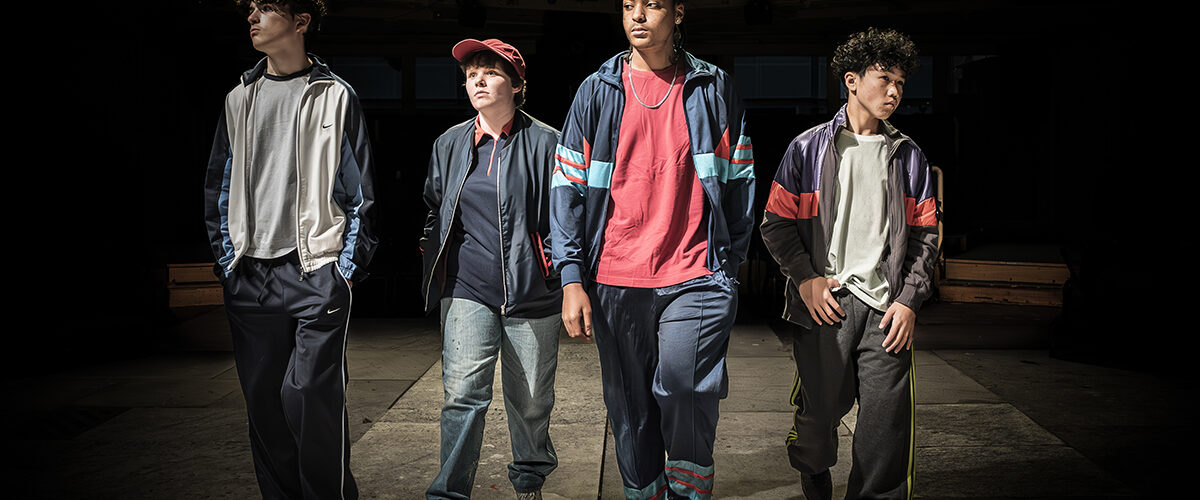
Mullarkey then swiftly transposes us to 1996 and a sweltering hot day in June. Market Street is awash with the usual baggage of shoppers and characters flit on and off the stage, some in less than a few seconds. Some roller skate, some push prams, some stroll uncertainly after one too many. But they all make up the fabric of this indomitable city.
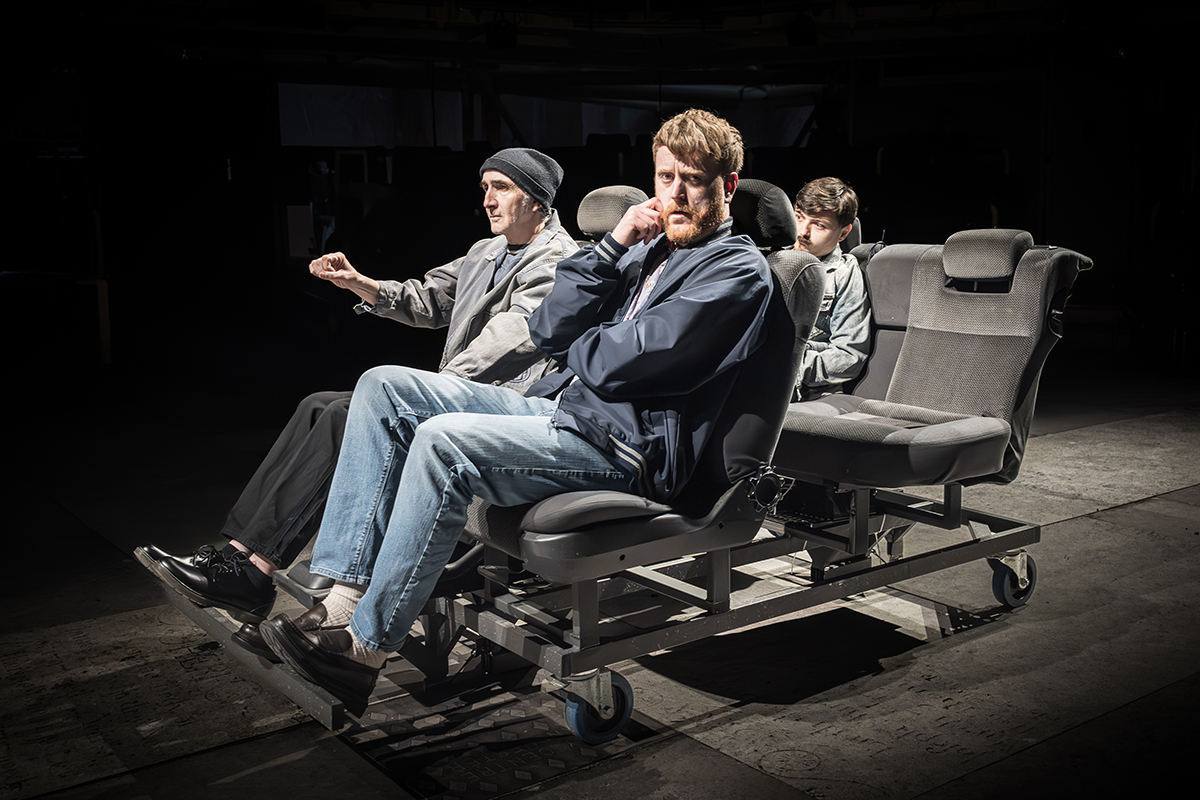
We are given vignettes of city centre life on that fateful Saturday: a husband and wife shop for clothes; a young boy undergoes a viola exam at Chethams; people queue to make phone calls from a BT box (remember them?); bored teenagers hang around looking moody.
This tableau of life is narrated by Jenny (Katherine Pearce) as the mood suddenly turns darker: a police cordon is put in place, Corporation Street is inaccessible, no one knows what’s going on as the heat only intensifies. Until, that is, an earth-shattering boom rings out and clouds of dust rain down on everyone. In one unforgettable moment a pregnant woman is lifted 10 feet in the air after taking the full force of the bomb blast. It is a moment of shock and silence in the theatre.
The production is funny and fast-paced. A runner down the centre of the stage ingeniously allows for dining tables and cars to be propelled across it, and at one stage a woman traverses the stage in nothing more than a swimsuit. A huge community cast adds to the authenticity of the production.
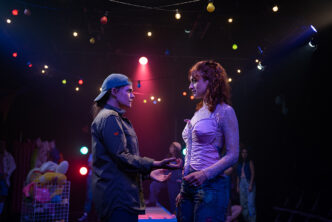
The play ends on a sombre note, with Cassidy and Pearce inhabiting two characters who chance upon in each other in Angel Meadow Park in the present day. Anti-Irish sentiment and the conversion of the city from the site of industrial warehouses to plush residential warehouse lettings gradually give way to a moving meditation on the tragedy of loss – and survival.
The production brilliantly captures the madcap spirit of Manchester and its refusal to kowtow to bombs, bigotry or bombast.

 Carmel Thomason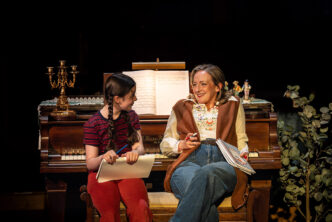
 Steve Timms