
 Carmel Thomason
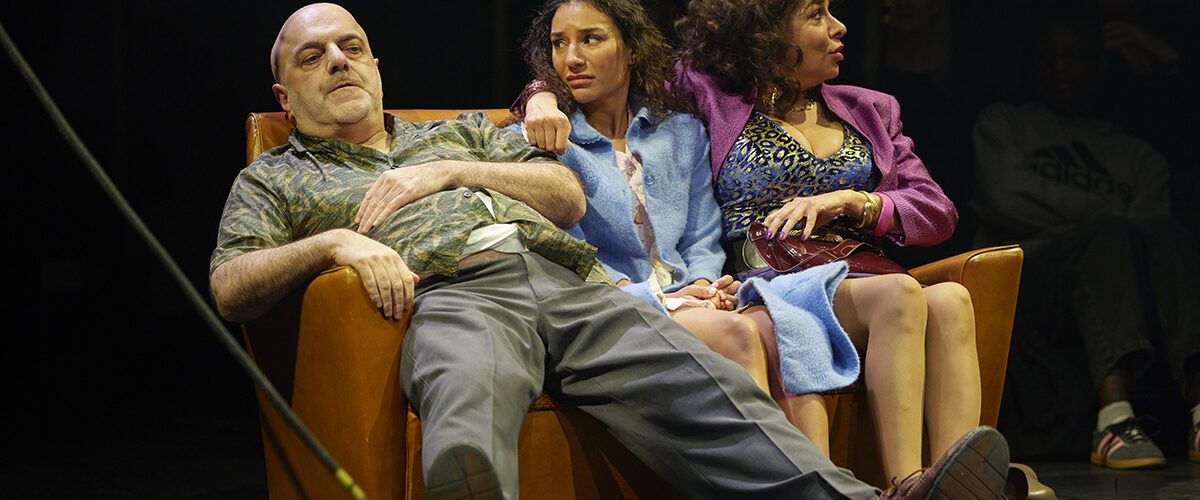
It is wonderful to see Manchester’s Royal Exchange start its 50th anniversary season on such a high. Tickets for its opening show ‘Road’ by Jim Cartwright have already sold out for the entire run. Although don’t lose hope if you want to see it – there are always the banquettes, the bench seating at the front by the stage which are released daily at noon as day seats and are much cheaper, so it could be a win-win.
The play is also celebrating an anniversary. It is 40 years since audiences were first introduced to the inhabitants of this road in Lancashire described as ‘at the end of the slag heap’. And that is how life feels for these characters in 1986, living at the hard end of Thatcher’s Britain.
The play is written as a series of vignettes, with the audience getting a glimpse inside the houses and the lives of the people behind each door. Aside from the location the one thread holding it together is Scullery, a part which feels like it could have been written for Johnny Vegas.
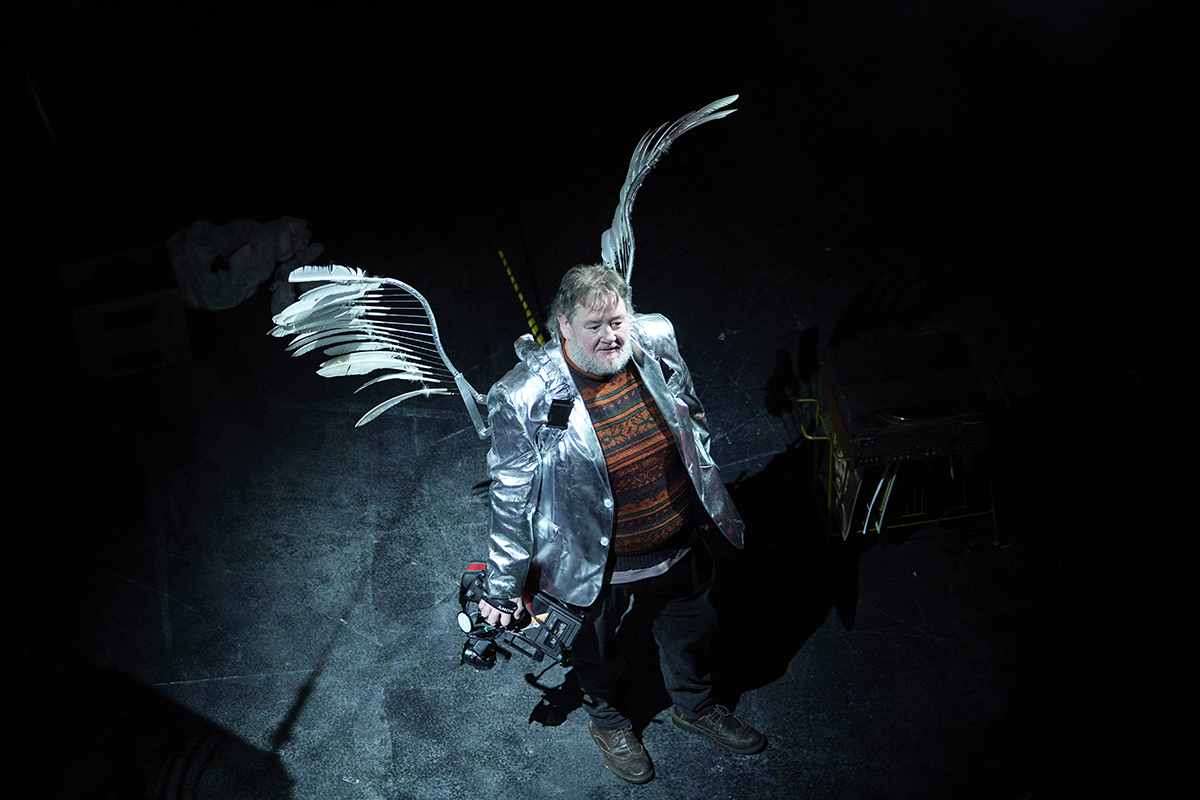
Scullery acts as a narrator, linking the stories and sometimes drawing us further in by filming actors’ monologues with a hand-held video camera, whose faces are projected onto a series of old, square TVs strewn from the ceiling. He is an amicable drunk, who swigs spirits straight from the bottle and looks like he hasn’t washed in a very long time.
There are many similarities to his rambling stand-up character as he breaks the third wall and talks to the audience, acknowledging them as visitors to his street for the night.
There is real potential for more energy in the banter here, something Vegas usually excels at. Here he appears constrained, perhaps more by the direction than the dialogue. Whatever it is, it is a shame because this play desperately needs to squeeze out every inch of humour as the core of it is so dark and sadly piercingly relevant today. As we watch two young people on stage literally starved of hope and life it feels a bit too close for comfort, when just this week new figures showed huge increases in Britain’s unemployment, with one in 6 young people unable to find a job and many economically inactive due to poor mental health.

Director Selina Cartmell and designer Leslie Travers clearly want us to make these comparisons by turning the play into an immersive and intense experience that starts from the moment you walk in off the street. For 15 minutes before the show and all throughout the interval the actors mingle among the crowd or act out small scenes, for example you might see Lesley Joseph pushing a rickety supermarket trolley full of old junk as one character or selling chips from a stall as another. There is a lot going on, taking up the whole foyer space, the Studio theatre space and the bar areas.
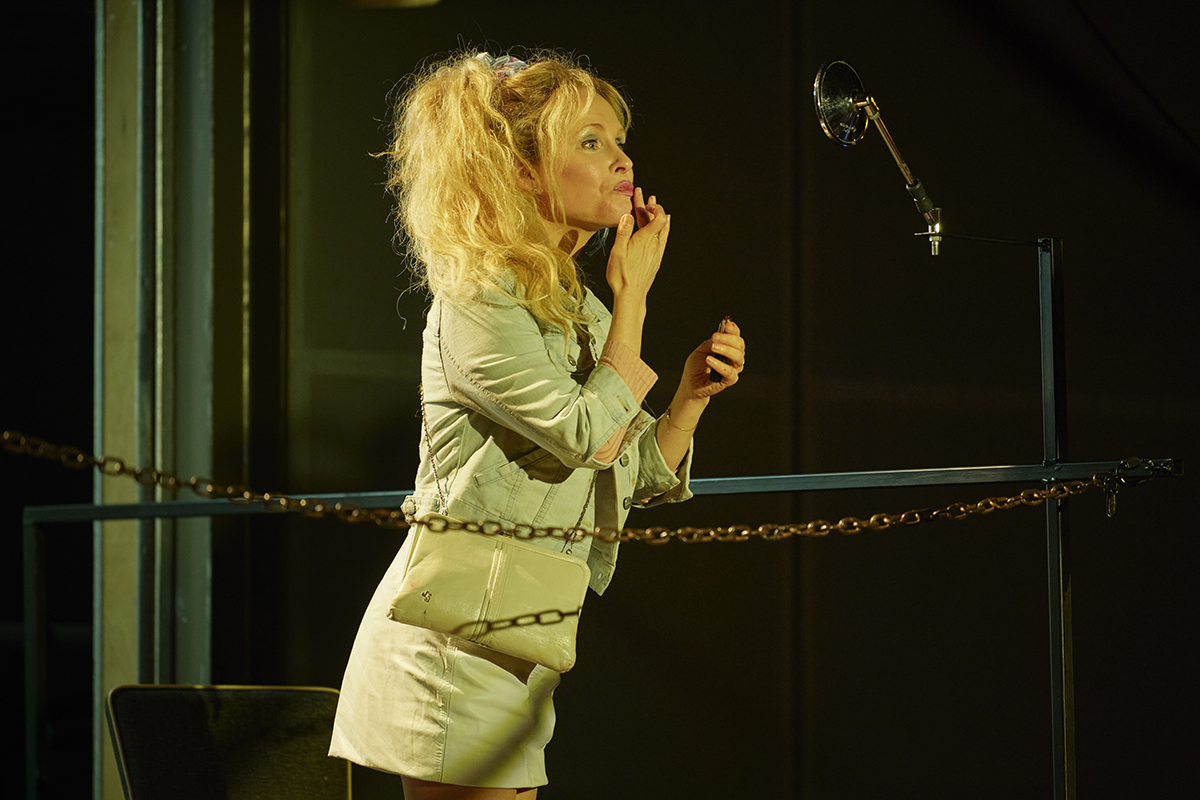
Once inside the module of the seated theatre the mood feels dystopian. Several TVs hang from the ceiling with a myriad of straggling wires. They are used for flashes of nostalgic 80s TV shows like Dukes of Hazard and 3,2,1, as well as magnifiying the emotions of individual actors, and a pre-recorded scene with Sir Tom Courtenay, who performed in the opening production at the theatre half a century ago. It works most of the time, although for those in the first and second gallery there are moments when the action is completely obscured by this hanging set.
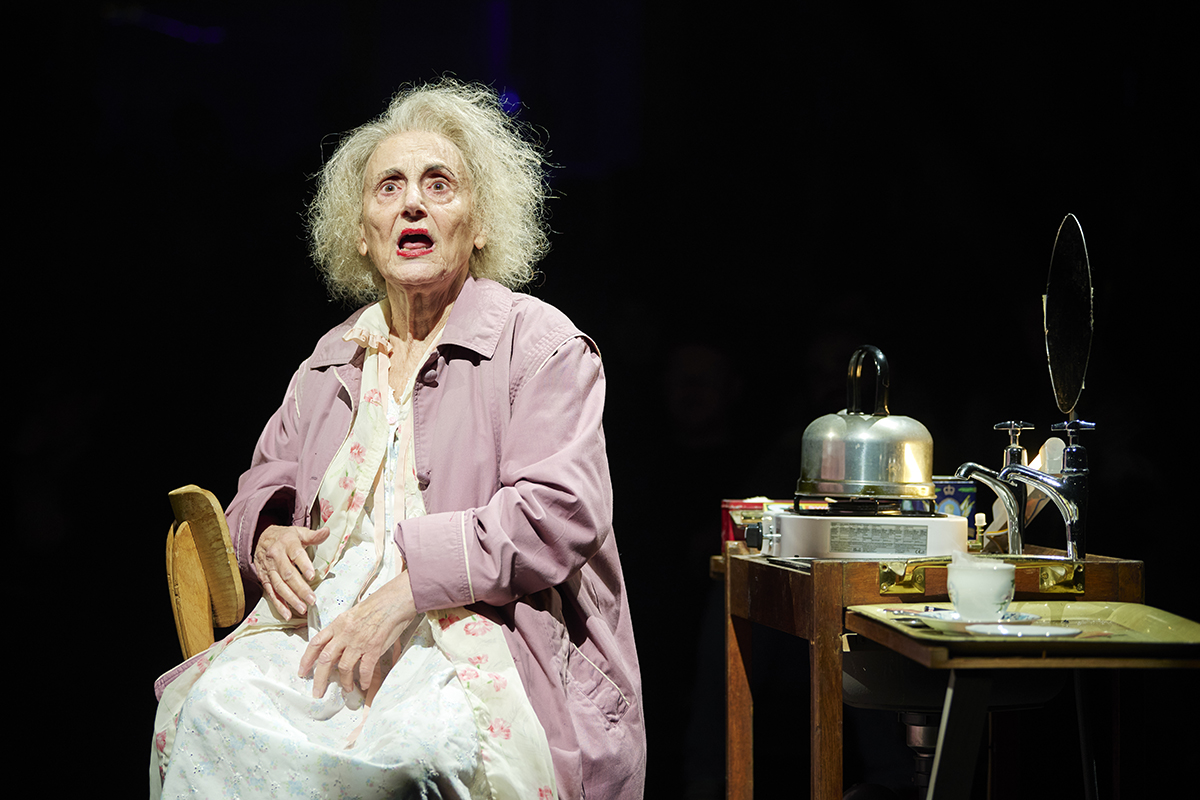
The high-calibre cast is no doubt a big draw for this production. Lucy Beaumont and Shobna Gulati are the other two big name castings, although their roles are no more substantial than the other actors in what is effectively an ensemble piece. There are 13 actors on stage, all apart from Vegas playing multiple roles. Hearing chat afterwards this caused confusion for some audience members. Aside from Gulati, who had very distinct changes, the other characters were not as clearly differentiated, leaving some wondering if they were watching the same character in a different setting.
In all it is a difficult watch, but there is much hope to be taken from a full, buzzing audience talking about their experience.
Road is at The Royal Exchange Theatre, Manchester from 13 February to 14 March 2026. Age guidance 14+


 Dave Porter
 Steve Timms